
When I started seeing messages in our community from women describing sharp, aching pain in their tailbone that seemed connected to their endometriosis symptoms, I’ll admit I was surprised. The number of sisters reaching out about this specific symptom made me realize how important it is to understand this lesser-discussed aspect of endometriosis.
As I dove into research to better support our community, I discovered something fascinating and concerning: nearly 50% of women seeking pelvic floor physical therapy for pelvic pain also have coexisting tailbone pain. There’s a real, documented connection between endometriosis and tailbone discomfort that deserves our attention. Today, I want to share what I’ve learned about coccyx pain endometriosis so that if you’re experiencing this symptom, you know you’re not alone and there are paths to relief.
What Is Coccyx Pain and Why Does It Matter?
Your coccyx, commonly called your tailbone, is a small triangular bone at the base of your spine made up of three to five fused vertebrae. It might be small, but it plays an important role in supporting the muscles, tendons, and ligaments in your pelvic region, especially when you’re sitting.
Coccydynia (the medical term for tailbone pain) can range from a dull ache to sharp, stabbing sensations. For women with endometriosis, this pain often intensifies during certain activities or times of their cycle, creating another layer of discomfort on top of the pelvic pain many of us already manage daily.
What struck me during my research is how debilitating this type of pain can be. Imagine dealing with the chronic pelvic pain, bloating, and fatigue of endometriosis, and then adding persistent tailbone pain that makes sitting, something most of us do for hours each day, excruciating.
The Connection Between Coccyx Pain Endometriosis and Your Body
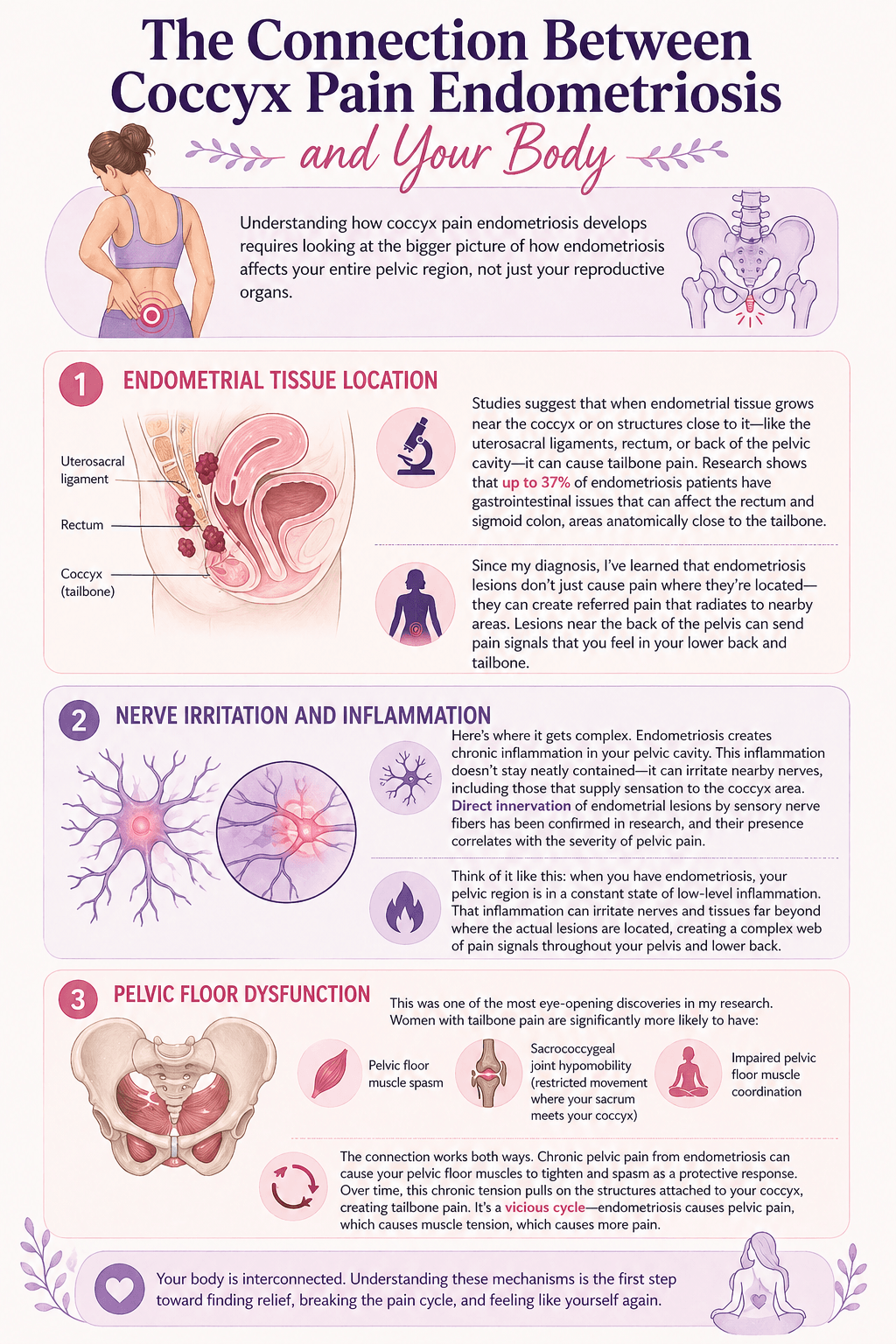
Understanding how coccyx pain endometriosis develops requires looking at the bigger picture of how endometriosis affects your entire pelvic region, not just your reproductive organs.
Endometrial Tissue Location
Studies suggest that when endometrial tissue grows near the coccyx or on structures close to it, like the uterosacral ligaments, rectum, or back of the pelvic cavity, it can cause tailbone pain. Research shows that up to 37% of endometriosis patients have gastrointestinal issues that can affect the rectum and sigmoid colon, areas anatomically close to the tailbone.
Since my diagnosis, I’ve learned that endometriosis lesions don’t just cause pain where they’re located, they can create referred pain that radiates to nearby areas. Lesions near the back of the pelvis can send pain signals that you feel in your lower back and tailbone.
Nerve Irritation and Inflammation
Endometriosis creates chronic inflammation in your pelvic cavity. This inflammation doesn’t stay neatly contained—it can irritate nearby nerves, including those that supply sensation to the coccyx area. Direct innervation of endometrial lesions by sensory nerve fibers has been confirmed in research, and their presence correlates with the severity of pelvic pain.
Think of it like this: when you have endometriosis, your pelvic region is in a constant state of low-level inflammation. That inflammation can irritate nerves and tissues far beyond where the actual lesions are located, creating a complex web of pain signals throughout your pelvis and lower back.
Pelvic Floor Dysfunction
This was one of the most eye-opening discoveries in my research. Women with tailbone pain are significantly more likely to have pelvic floor muscle spasm, sacrococcygeal joint hypomobility (restricted movement where your sacrum meets your coccyx), and impaired pelvic floor muscle coordination.
The connection works both ways. Chronic pelvic pain from endometriosis can cause your pelvic floor muscles to tighten and spasm as a protective response. Over time, this chronic tension pulls on the structures attached to your coccyx, creating tailbone pain. It’s a vicious cycle—endometriosis causes pelvic pain, which causes muscle tension, which causes more pain.
Recognizing Coccyx Pain Endometriosis Symptoms
While I haven’t experienced this personally, women in our community and research studies describe coccyx pain endometriosis symptoms as:
Pain Characteristics
- Sharp, stabbing pain at the base of your spine
- Dull, constant aching in the tailbone area
- Throbbing sensations that may radiate to your lower back, hips, or legs
- Pain that worsens with sitting, especially on hard surfaces
- Discomfort when transitioning from sitting to standing
- Pain during bowel movements
Cyclical Patterns
Many women notice their tailbone pain intensifies during their menstrual cycle, similar to other endometriosis symptoms. The hormonal fluctuations that worsen endo symptoms can also increase inflammation and muscle tension, amplifying coccyx pain.
Associated Symptoms
Research shows women with coccygodynia and pelvic pain often experience:
- Higher overall pain scores
- Increased muscle spasm in the pelvic floor
- Outlet dysfunction constipation (31.7% of women with coccyx pain vs. 10% without)
- Difficulty with bowel movements
- Pain during sexual activity
Why Some Women Experience Tailbone Pain and Others Don’t
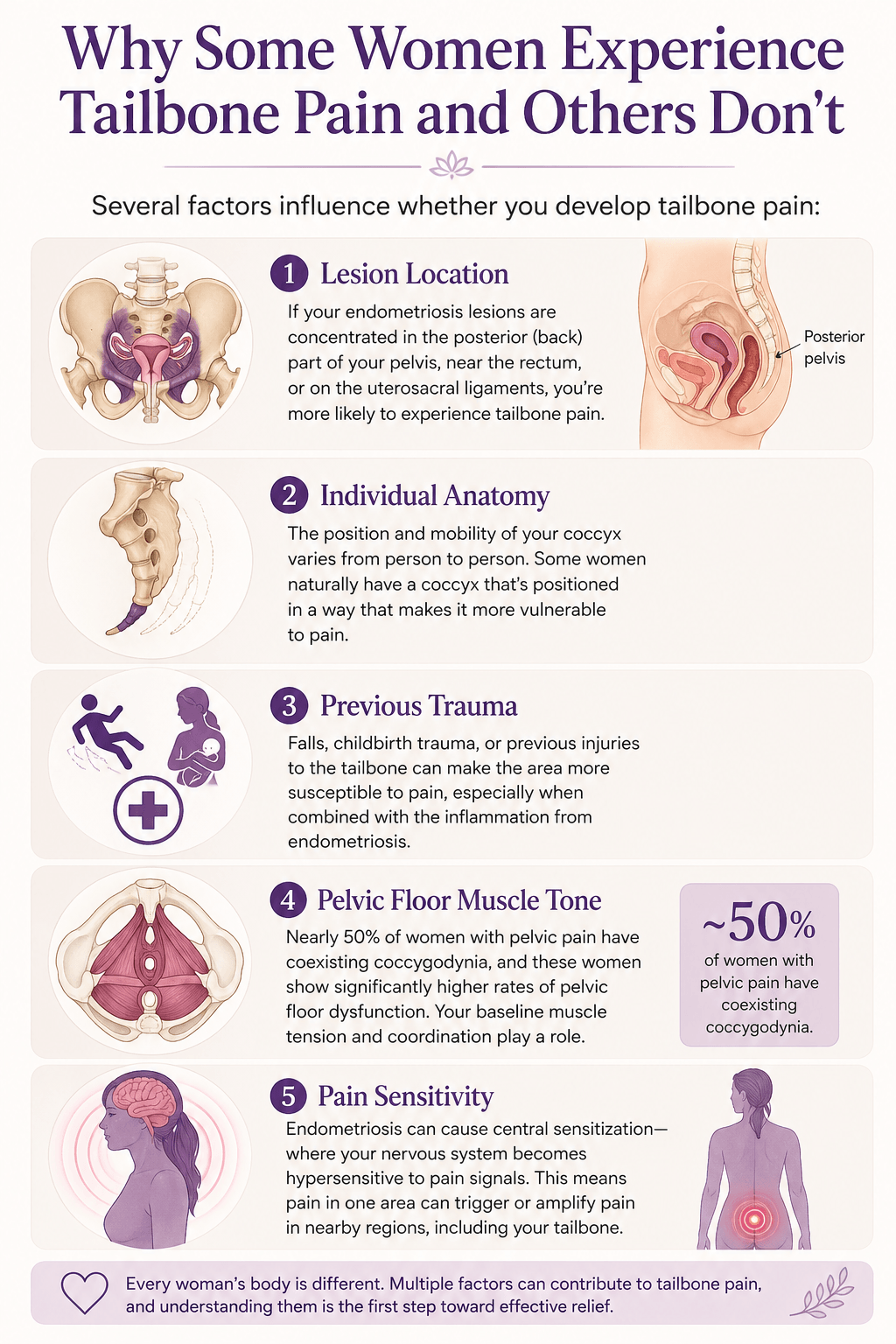
This is something I’ve thought about a lot—why do some of us with endometriosis experience certain symptoms while others don’t? Just like I have severe pain on my left side when I eat gluten but not everyone with endo shares that trigger, coccyx pain endometriosis doesn’t affect every woman with the condition.
Several factors influence whether you develop tailbone pain:
Diagnosing the Source of Your Tailbone Pain
If you’re experiencing what you suspect is coccyx pain endometriosis, getting a proper diagnosis is crucial. Tailbone pain can have multiple causes, and understanding the specific source of yours will guide the most effective treatment.
Medical Evaluation
Your healthcare provider should conduct:
- A detailed history of your pain patterns, triggers, and relationship to your menstrual cycle
- Physical examination, including pelvic exam to check for endometriosis-related tenderness
- Assessment of your coccyx mobility and surrounding muscle tension
- Evaluation for other potential causes of tailbone pain
Specialized Testing
Depending on your situation, your doctor might recommend:
- MRI or ultrasound to visualize endometriosis lesions and their proximity to the coccyx
- X-rays to evaluate coccyx position and rule out fractures or structural abnormalities
- Referral to a pelvic floor physical therapist for detailed musculoskeletal assessment
The Importance of a Comprehensive Approach
One study I found particularly illuminating emphasized that pelvic examination combined with neuro-musculoskeletal examination provides a more complete assessment of chronic pelvic pain associated with endometriosis. Your tailbone pain might be directly caused by endometriosis lesions, or it might be a secondary effect of pelvic floor dysfunction, and both require attention.
Treatment Options for Coccyx Pain Endometriosis
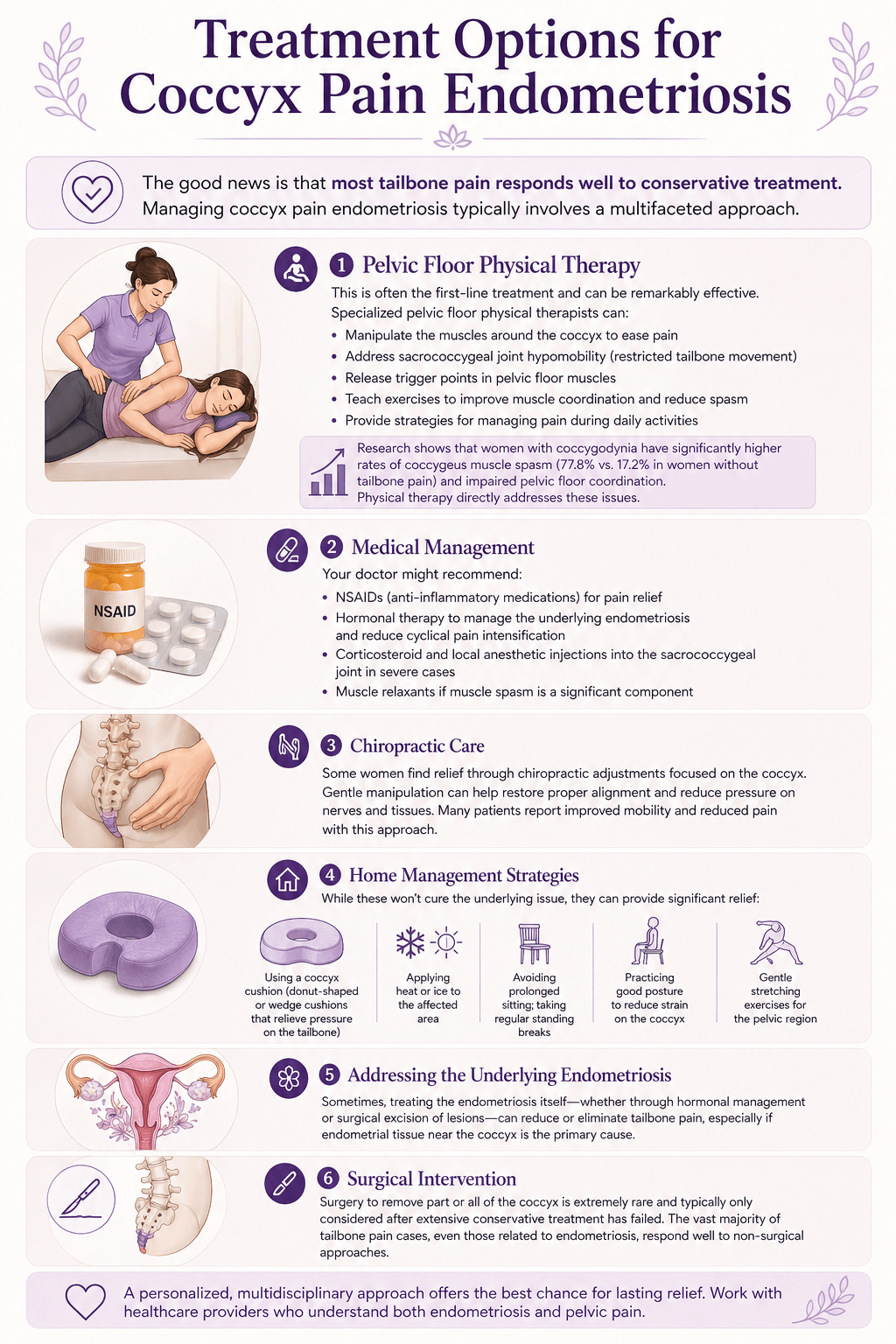
The good news is that most tailbone pain responds well to conservative treatment. Managing coccyx pain endometriosis typically involves a multifaceted approach.
Pelvic Floor Physical Therapy
This is often the first-line treatment and can be remarkably effective. Specialized pelvic floor physical therapists can:
- Manipulate the muscles around the coccyx to ease pain
- Address sacrococcygeal joint hypomobility (restricted tailbone movement)
- Release trigger points in pelvic floor muscles
- Teach exercises to improve muscle coordination and reduce spasm
- Provide strategies for managing pain during daily activities
Research shows that women with coccygodynia have significantly higher rates of coccygeus muscle spasm (77.8% vs. 17.2% in women without tailbone pain) and impaired pelvic floor coordination. Physical therapy directly addresses these issues.
Medical Management
Your doctor might recommend:
- NSAIDs (anti-inflammatory medications) for pain relief
- Hormonal therapy to manage the underlying endometriosis and reduce cyclical pain intensification
- Corticosteroid and local anesthetic injections into the sacrococcygeal joint in severe cases
- Muscle relaxants if muscle spasm is a significant component
Chiropractic Care
Some women find relief through chiropractic adjustments focused on the coccyx. Gentle manipulation can help restore proper alignment and reduce pressure on nerves and tissues. Many patients report improved mobility and reduced pain with this approach.
Home Management Strategies
While these won’t cure the underlying issue, they can provide significant relief:
- Using a coccyx cushion (donut-shaped or wedge cushions that relieve pressure on the tailbone)
- Applying heat or ice to the affected area
- Avoiding prolonged sitting; taking regular standing breaks
- Practicing good posture to reduce strain on the coccyx
- Gentle stretching exercises for the pelvic region
Addressing the Underlying Endometriosis
Sometimes, treating the endometriosis itself—whether through hormonal management or surgical excision of lesions—can reduce or eliminate tailbone pain, especially if endometrial tissue near the coccyx is the primary cause.
Surgical Intervention
Surgery to remove part or all of the coccyx is extremely rare and typically only considered after extensive conservative treatment has failed. The vast majority of tailbone pain cases, even those related to endometriosis, respond well to non-surgical approaches.
Living with Coccyx Pain
Based on what I’ve learned from our community members who experience this, here are practical adaptations that can improve quality of life while pursuing treatment:
At Work
- Use a specialized cushion on your office chair
- Request a standing desk or sit-stand workstation
- Take brief walking breaks every 30-45 minutes
- Adjust your chair height and position to minimize tailbone pressure
At Home
- Add cushioning to hard seating surfaces
- Limit time spent on activities that aggravate pain
- Practice relaxation techniques to reduce muscle tension—I’ve learned from managing my own endo that stress directly impacts pain levels
- Create a supportive sleep environment (some women find side-sleeping with a pillow between their knees helpful)
During Flares
- Increase anti-inflammatory practices (diet, rest, stress management)
- Apply heat to the lower back and tailbone area
- Practice gentle pelvic floor relaxation exercises
- Don’t hesitate to communicate with your healthcare team if pain becomes unmanageable
The Emotional Impact of Multiple Pain Sources
One thing I’ve deeply appreciated since my diagnosis is how much endometriosis affects not just our bodies but our emotional wellbeing. When you’re managing chronic pelvic pain and then add persistent tailbone pain, it compounds the challenge.
I know from my own experience with severe abdominal pain, food intolerances (gluten causes intense left-sided pain for me), and the way stress triggers my symptoms that chronic pain is exhausting—physically, mentally, and emotionally. For women dealing with coccyx pain endometriosis, there’s an added frustration because sitting is such a fundamental part of daily life.
Please know that your feelings about this, whether it’s frustration, sadness, anger, or exhaustion, are completely valid. Seeking support through therapy, our community, or support groups isn’t a sign of weakness; it’s a smart strategy for managing the full impact of chronic pain.
Here are some words from the Endo community on Reddit:
When to Seek Additional Help
Don’t hesitate to reach out for medical attention if:
- Your tailbone pain is severe or significantly worsening
- Conservative treatments haven’t provided relief after several weeks
- Pain is interfering with your ability to work, sleep, or perform daily activities
- You notice new symptoms like numbness, tingling, or radiating pain down your legs
- Your bowel or bladder function changes
- You suspect your endometriosis treatments aren’t adequately addressing your symptoms
Remember, you deserve comprehensive care that addresses all your symptoms, not just the ones your doctor considers “primary.” Tailbone pain might not be the most common endometriosis symptom, but it significantly impacts your quality of life and deserves proper attention and treatment.
Moving Forward with Knowledge and Support
Though I haven’t personally experienced coccyx pain endometriosis, researching this topic has deepened my understanding of how complex and varied endometriosis symptoms truly are. Some of us deal with severe digestive issues, others with tailbone pain, many with debilitating pelvic pain, and some with a combination of multiple symptoms.
What continues to amaze me about our Endometriosis Sisters community is how we support each other through these varied experiences. Your tailbone pain is just as valid as my gluten-triggered left-sided pain or another sister’s severe fatigue. We’re all navigating this challenging condition in our own unique ways, and sharing our knowledge and experiences makes us stronger.
If you’re dealing with tailbone pain alongside your endometriosis, I hope this information helps you feel seen, understood, and empowered to seek appropriate care. The connection between endometriosis and coccyx pain is real, it’s documented in medical research, and most importantly—it’s treatable.
You don’t have to just accept tailbone pain as another burden of endometriosis. With the right combination of treatments, physical therapy, medical management, lifestyle adaptations, and addressing the underlying endometriosis, most women find significant relief.
Are you experiencing tailbone pain alongside your endometriosis? What strategies have helped you manage it? Share your story in the comments below or join our Endometriosis Sisters community, your experience might help another sister who’s struggling with this same symptom find the relief she deserves.