When I was diagnosed with stage 3 endometriosis in November 2025, I thought I finally understood all the pieces of my health puzzle. But through conversations with members of our Endometriosis Sisters community, I’ve learned that many of you are navigating not just endometriosis, but also Ehlers-Danlos Syndrome (EDS).
The overlap between EDS and endometriosis has prompted me to research this connection, and what I’ve discovered is both fascinating and important for us to understand.
While I don’t personally have EDS, I’m writing this article to share what current research tells us about the relationship between ehlers danlos and endometriosis, because knowledge is power, and understanding these connections can help you advocate for better care.
What is Ehlers-Danlos Syndrome?
Before we explore the connection with endometriosis, let’s understand what EDS actually is. Ehlers-Danlos Syndrome is a group of hereditary disorders that affect your connective tissue, the material that provides support and structure to your skin, joints, blood vessels, and organs.
There are 13 recognized types of EDS, but the three most common are:
- Hypermobile EDS (hEDS): The most common type, characterized by extremely loose and flexible joints that may click or dislocate easily
- Classical EDS (cEDS): Marked by stretchy, fragile skin and easy scarring
- Vascular EDS (vEDS): The most serious type, involving fragile blood vessels and organs that can rupture
Common symptoms across all EDS types include joint hypermobility, chronic pain, fatigue, skin that stretches or bruises easily, digestive complications, poor circulation, and headaches.
The Research: How Common is Endometriosis in People with EDS?
The relationship between eds endometriosis is more nuanced than you might expect. Studies estimate that 6-23% of individuals with EDS also have endometriosis. While this might sound significant, it’s important to note that endometriosis affects approximately 10% of reproductive-age women in the general population—meaning the prevalence among EDS patients may not be dramatically higher than average.
However, here’s where it gets complicated: over 92% of women with EDS report chronic pelvic pain, which is also a hallmark symptom of endometriosis. This overlap in symptoms can make differential diagnosis incredibly challenging, and some researchers suggest that cases of EDS may be misdiagnosed as endometriosis, or vice versa.
Recent research from 2021 even suggests that endometriosis may occur less frequently in people with EDS than previously thought, though gynecological complications overall are common in this population.
Joint Hypermobility in Endometriosis Patients
While research on ehlers danlos syndrome and endometriosis causing one another is limited, there’s fascinating evidence that women with endometriosis often exhibit greater joint hypermobility than the general population—especially those with advanced disease.
A cross-sectional study found striking correlations between endometriosis and eds severity and joint hypermobility:
- Stage I endometriosis: 30% had joint hypermobility
- Stage II endometriosis: 40% had joint hypermobility
- Stage III endometriosis: 50% had joint hypermobility
- Stage IV endometriosis: 60% had joint hypermobility
This progressive increase suggests that chronic inflammation and hormone dysregulation present in both conditions may affect the musculoskeletal system in significant ways.
Understanding the Potential Links Between Ehlers Danlos and Endometriosis
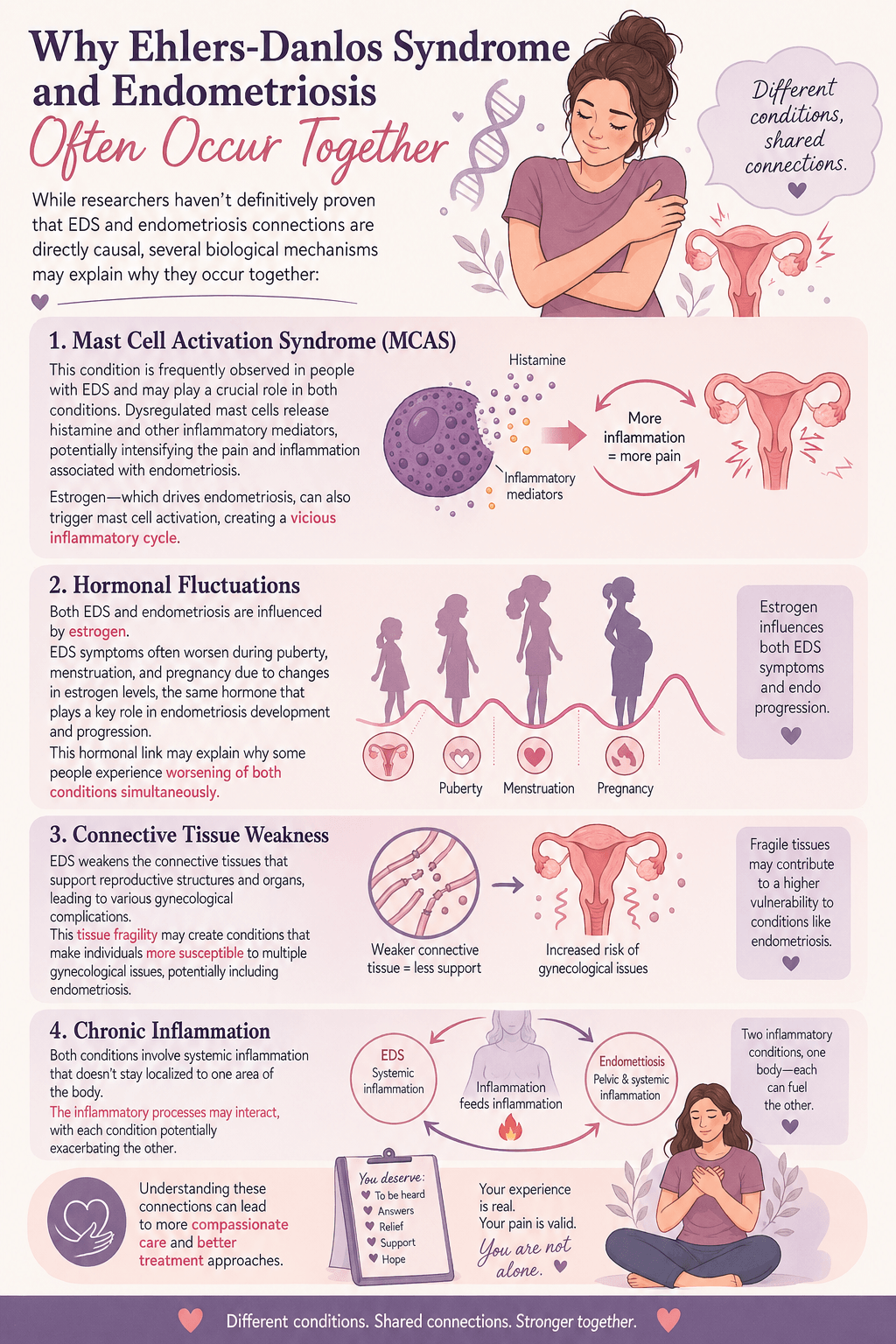
While researchers haven’t definitively proven that ehlers danlos endometriosis connections are directly causal, several biological mechanisms may explain why they occur together:
Mast Cell Activation Syndrome (MCAS): This condition is frequently observed in people with EDS and may play a crucial role in both conditions. Dysregulated mast cells release histamine and other inflammatory mediators, potentially intensifying the pain and inflammation associated with endometriosis. Estrogen—which drives endometriosis, can also trigger mast cell activation, creating a vicious inflammatory cycle.
Hormonal Fluctuations: Both EDS and endometriosis are influenced by estrogen. EDS symptoms often worsen during puberty, menstruation, and pregnancy due to changes in estrogen levels, the same hormone that plays a key role in endometriosis development and progression. This hormonal link may explain why some people experience worsening of both conditions simultaneously.
Connective Tissue Weakness: EDS weakens the connective tissues that support reproductive structures and organs, leading to various gynecological complications. This tissue fragility may create conditions that make individuals more susceptible to multiple gynecological issues, potentially including endometriosis.
Chronic Inflammation: Both conditions involve systemic inflammation that doesn’t stay localized to one area of the body. The inflammatory processes may interact, with each condition potentially exacerbating the other.
Overlapping Symptoms That Complicate Diagnosis
One of the biggest challenges for those navigating the relationship between ehlers danlos and endometriosis is the significant symptom overlap:
- Chronic pelvic pain
- Dysmenorrhea (painful periods)
- Menorrhagia (heavy menstrual bleeding)
- Irregular menstruation
- Bleeding between periods
- Digestive complications
- Chronic fatigue
This overlap means that if you have both conditions, it can be incredibly difficult to determine which symptoms are caused by which condition. Even healthcare providers may struggle with accurate diagnosis, sometimes misdiagnosing one condition as the other.
Other Gynecological Complications in EDS
Research shows that people with EDS experience a wide range of gynecological issues beyond endometriosis:
- Pelvic organ prolapse (affecting the bladder, rectum, or uterus)
- Polycystic ovary syndrome (PCOS)
- Uterine fibroids and polyps
- Pelvic floor dysfunction
- Vulvodynia (chronic vulvar pain)
- Dyspareunia (painful intercourse)
- Vaginal dryness and tissue fragility
- Post-coital bleeding
Studies found that 67% of women with EDS reported genital mucosal problems, highlighting how significantly this condition affects reproductive health.
What This Means for Your Care
If you suspect you may have both endometriosis and EDS, or if you’ve been diagnosed with one and are experiencing symptoms of the other, here’s what you should know:
Seek Comprehensive Evaluation: Don’t assume all your symptoms are from one condition. Work with healthcare providers who understand both EDS and endometriosis and can help differentiate between them.
Consider Genetic Testing: For most types of EDS (except hypermobile EDS), genetic testing can confirm the diagnosis. Combined with your family history and clinical evaluation of joint hypermobility and skin characteristics, this can provide clarity.
Address Both Conditions: If you do have both, managing one without addressing the other may leave you still suffering. Comprehensive care that accounts for the unique challenges of each condition is essential.
Document Your Symptoms: Keep detailed records of when symptoms occur, their severity, and any patterns you notice. This can help your healthcare team understand whether symptoms are related to hormonal cycles (suggesting endometriosis), joint/tissue issues (suggesting EDS), or both.
Explore Multidisciplinary Care: Given the complexity of managing both conditions, you may benefit from a care team that includes gynecologists, rheumatologists, pain specialists, pelvic floor physical therapists, and other specialists who understand connective tissue disorders.
The Importance of Community and Advocacy
What strikes me most in researching this topic is how interconnected our bodies truly are. For those of you navigating both endometriosis and EDS, you’re dealing with compounded complexity—two chronic conditions that can feed into each other’s symptoms and complicate each other’s management.
The research on the connection between ehlers danlos syndrome and endometriosis is still evolving, with some studies suggesting higher prevalence and others indicating it may be less common than previously thought. What’s clear is that more research is needed, and patient voices matter in driving that research forward.
If you’re living with both conditions, please know that your experience is valid, even if medical understanding hasn’t fully caught up yet. The overlap in symptoms isn’t in your head—it’s real, documented, and deserves comprehensive care.
At Endometriosis Sisters, we believe in supporting each other through all the complexities of chronic illness, whether that’s endometriosis alone or endometriosis alongside other conditions like EDS. Your journey may be more complicated, but you’re not alone in navigating it.
Frequently Asked Questions
What is the connection between eds endometriosis?
Research suggests that 6-23% of people with EDS also have endometriosis, though this may not be significantly higher than the general population rate of about 10%. The connection appears to involve shared mechanisms including mast cell activation, hormonal fluctuations (particularly estrogen), and chronic inflammation. Additionally, studies show that women with severe endometriosis (stage IV) have joint hypermobility rates as high as 60%, suggesting a bidirectional relationship.
Can EDS be misdiagnosed as endometriosis?
Yes, misdiagnosis can occur because both conditions share common symptoms including chronic pelvic pain, painful periods, heavy menstrual bleeding, and menstrual irregularities. Over 92% of women with EDS report chronic pelvic pain, which is also a hallmark of endometriosis, making differential diagnosis challenging. This is why comprehensive evaluation by specialists familiar with both conditions is important.
Does endometriosis cause joint hypermobility?
While endometriosis doesn’t directly “cause” EDS or hypermobility syndromes, research shows that women with endometriosis—especially advanced stages—exhibit greater joint hypermobility than the general population. A study found that 60% of women with stage IV endometriosis had joint hypermobility, compared to only 30% with stage I disease. This suggests that the chronic inflammation and hormone dysregulation in endometriosis may affect the musculoskeletal system.
What role does MCAS play in ehlers danlos and endometriosis?
Mast Cell Activation Syndrome (MCAS) is frequently observed in people with EDS and may be a key link between ehlers danlos endometriosis presentations. Dysregulated mast cells release histamine and inflammatory mediators that can intensify pain and inflammation. Endometriosis is estrogen-dependent, and elevated estrogen levels can trigger mast cell activation, creating a cycle of inflammation. This may explain why symptoms of both conditions can worsen simultaneously, particularly around menstruation.
How is EDS diagnosed?
EDS diagnosis typically begins with clinical evaluation of joint hypermobility, skin characteristics, and family history. Healthcare providers assess which joints are loose, discuss chronic pain and fatigue, and examine the cardiovascular, gastrointestinal, and muscle systems. For most types of EDS (except hypermobile EDS), genetic testing can confirm the diagnosis. Hypermobile EDS, the most common type, is diagnosed clinically based on symptoms and criteria since its genetic basis remains unclear.
What other gynecological conditions are common with EDS?
Beyond the potential connection with endometriosis, people with EDS frequently experience numerous gynecological complications including pelvic organ prolapse, PCOS, uterine fibroids and polyps, pelvic floor dysfunction, vulvodynia, painful intercourse, vaginal tissue fragility, and irregular or heavy menstrual bleeding. Studies found that 67% of women with EDS reported genital mucosal problems. These complications occur because EDS weakens the connective tissues that support reproductive organs.
Should I be tested for EDS if I have severe endometriosis with joint issues?
If you have endometriosis and are experiencing joint hypermobility, chronic joint pain, skin that bruises or stretches easily, frequent dislocations, or other symptoms consistent with EDS, it’s worth discussing evaluation with your healthcare provider. Research shows that advanced endometriosis is associated with higher rates of joint hypermobility, so these symptoms shouldn’t be dismissed. A comprehensive evaluation by specialists familiar with both conditions can help determine if you have one or both disorders.
How does estrogen affect both ehlers danlos syndrome and endometriosis?
Estrogen plays a significant role in both conditions. Endometriosis is estrogen-dependent, meaning the hormone drives the growth and progression of endometrial-like tissue. For people with EDS, symptoms often worsen during times of hormonal fluctuation—puberty, menstruation, and pregnancy—when estrogen levels change. Estrogen can also trigger mast cell activation, releasing inflammatory mediators that intensify pain and inflammation in both conditions. This hormonal link may explain why some people experience worsening of both EDS and endometriosis symptoms simultaneously, particularly during menstrual cycles.
Sources Referenced:
- The EDS Clinic – Endometriosis and Ehlers-Danlos Syndrome
- Medical News Today – Is there a link between Ehlers-Danlos syndrome and endometriosis?
- International Endometriosis Surgical Specialists – Understanding Hypermobile Ehlers-Danlos Syndrome (hEDS) and Endometriosis
- Pelvic Rehabilitation Medicine – Is There a Connection Between Endometriosis and Ehlers Danlos Syndrome?
- Journal of Community Health Research – Cross-Sectional Analysis of Joint Hypermobility in Women with Endometriosis
- Cleveland Clinic – Ehlers-Danlos Syndrome (EDS): Symptoms, Treatment & Tests
- The EDS Clinic – The Role of Mast Cells in Endometriosis
- PubMed – Obstetrics and gynecology in Ehlers-Danlos syndrome
- International Endometriosis Surgical Specialists – MCAS and Endometriosis
- PMC – Urogenital Ehlers-Danlos Syndromes and Hypermobility Spectrum Disorders