When several women in our Endometriosis Sisters community started messaging me about their experiences with intermittent fasting, I’ll admit I was curious but skeptical.
Could changing when you eat—not just what you eat—really make a difference in managing endometriosis symptoms?
After my endometriosis started causing me issues, I’ve become hyperaware of how every dietary choice affects my body, but fasting and endometriosis wasn’t something I’d explored personally.
I’ve done extensive research, talked to women in our community who swear by it, and consulted the latest medical studies to understand whether this approach might help those of us living with endo.
Today, I want to share what I’ve learned about fasting and endometriosis, the potential benefits, the risks, and whether it might be worth considering for your symptom management toolkit.
What Is Fasting and Why Are Women with Endo Trying It?
Before we talk about endometriosis and fasting, let’s clarify what we’re talking about. Fasting isn’t about starving yourself or following extreme diets.
In the context of health management, most people refer to intermittent fasting, eating patterns that cycle between periods of eating and voluntary fasting.
Common approaches include:
- 16:8 method: Fasting for 16 hours and eating within an 8-hour window (like eating between noon and 8 PM)
- 5:2 diet: Eating normally five days a week and restricting calories two days
- Alternate day fasting: Alternating between normal eating days and fasting or very low-calorie days
Women in our community have become interested in fasting endometriosis management because research suggests fasting may influence inflammation, hormonal balance, and cellular repair processes, which are all relevant factors for endometriosis.
The Science Behind Endometriosis Fasting
Since my diagnosis, I’ve learned that endometriosis is fundamentally a chronic inflammatory condition. Those misplaced endometrial tissues create persistent inflammation in the pelvic cavity, and reducing that inflammation is key to managing symptoms.
Inflammation Reduction
Research indicates that fasting can help reduce systemic inflammation in the body. When you fast, your body shifts from using glucose as its primary fuel source to burning fat, which produces fewer inflammatory byproducts. For those of us with endometriosis, anything that reduces inflammation without medication is worth considering.
Autophagy Activation
Here’s where it gets scientifically interesting. Fasting triggers a process called autophagy, essentially, your body’s way of cleaning out damaged cells and regenerating healthier ones. During periods of nutrient restriction, your cells activate autophagy to recycle components and maintain cellular health.
In the context of endometriosis, autophagy is particularly relevant because it’s influenced by estrogen and progesterone—the same hormones involved in endometriosis.
Estrogen tends to suppress autophagy, while progesterone can stimulate it. Fasting may help modulate this process in ways that could potentially benefit endometriosis symptoms, though more research specific to endo is needed.
Hormonal Modulation
One of the reasons I’m personally cautious about fasting is its impact on hormones. Some research suggests that strategic, short-term fasting may help improve hormonal balance.
However, other studies indicate that extreme or prolonged fasting can disrupt hormonal cycles, which is the last thing those of us with endometriosis need.
Energy Conservation and Healing
Fasting gives your digestive system a break, allowing your body to redirect energy toward healing and regeneration. For women whose endometriosis affects their digestive tract, which is incredibly common, this rest period might reduce gastrointestinal symptoms.
Community Insights on Endometriosis Fasting
I’ve been moved by stories from women in our community who have experimented with it. One sister shared her experience with intermittent fasting after her stage 3 endometriosis diagnosis, noting that she had only one moderate flare-up in the weeks following her laparoscopic surgery.
She described her approach: starting mornings with ginger tea (which has natural anti-inflammatory properties), waiting until noon for her first meal, and finishing eating by 8 PM. She emphasized eating multiple smaller portions throughout her 8-hour eating window and avoiding inflammatory foods like caffeine, alcohol, and processed foods.
What struck me about her story was her observation that when she did indulge in inflammatory foods, she definitely felt the negative effects. This resonates with my own experience. I know firsthand how gluten, dairy, and certain gassy foods trigger my symptoms. Perhaps the benefit isn’t just the fasting itself, but the increased mindfulness about food choices that often comes with structured eating windows.
Another woman mentioned that intermittent fasting helped her feel more in control of her symptoms and potentially aided in her surgical recovery. While anecdotal, these experiences suggest that for some women, fasting endometriosis management might be worth exploring under proper guidance.
Some experiences from sisters on Reddit:
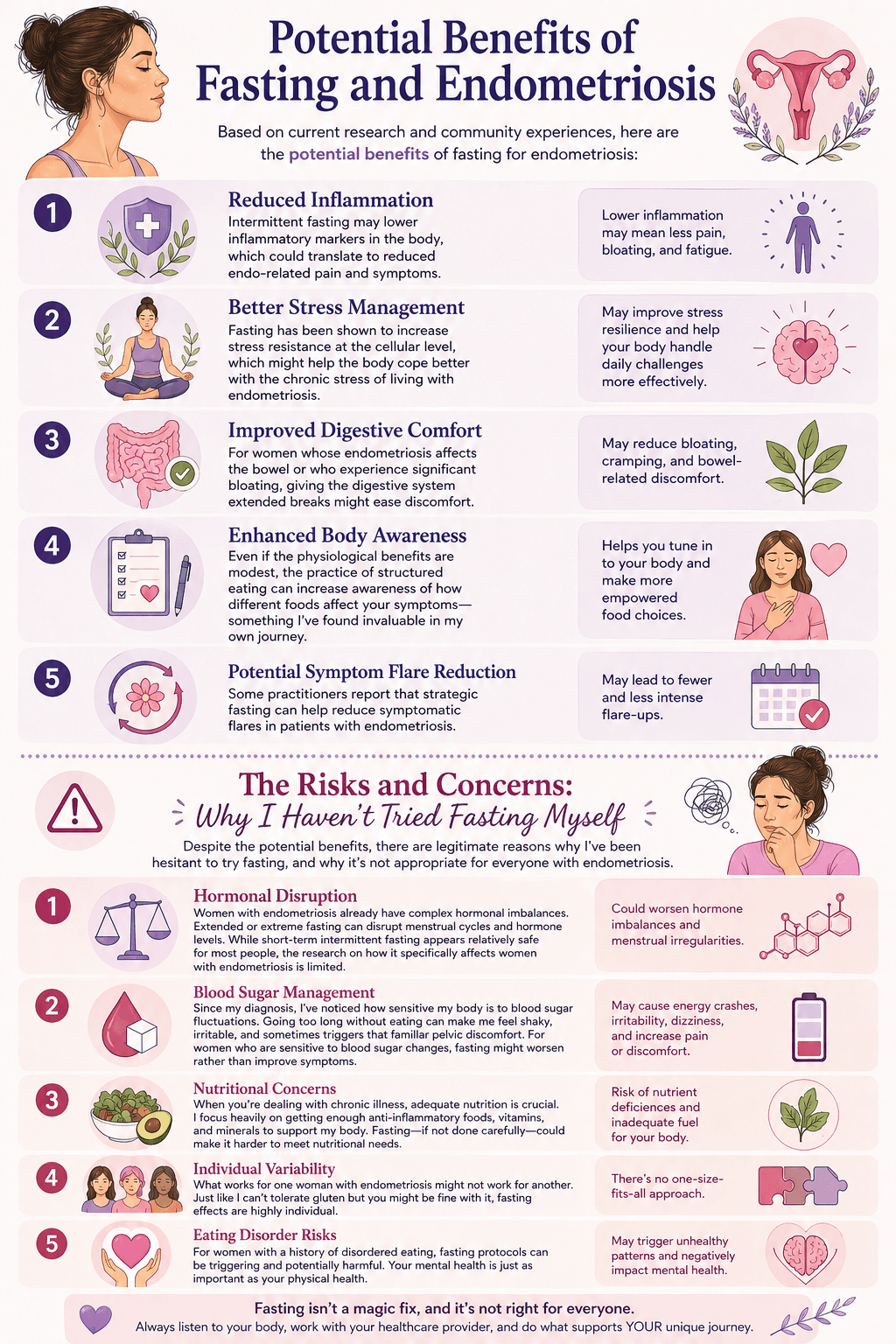
Potential Benefits of Fasting and Endometriosis
Based on current research and community experiences, here are the potential benefits of endometriosis and fasting:
Reduced Inflammation
Intermittent fasting may lower inflammatory markers in the body, which could translate to reduced endo-related pain and symptoms.
Better Stress Management
Fasting has been shown to increase stress resistance at the cellular level, which might help the body cope better with the chronic stress of living with endometriosis.
Improved Digestive Comfort
For women whose endometriosis affects the bowel or who experience significant bloating (which I definitely do), giving the digestive system extended breaks might ease discomfort.
Enhanced Body Awareness
Even if the physiological benefits are modest, the practice of structured eating can increase awareness of how different foods affect your symptoms—something I’ve found invaluable in my own journey.
Potential Symptom Flare Reduction
Some practitioners report that strategic fasting can help reduce symptomatic flares in patients with endometriosis.
The Risks and Concerns: Why I Haven’t Tried Fasting Myself
Despite the potential benefits, there are legitimate reasons why I’ve been hesitant to try fasting, and why it’s not appropriate for everyone with endometriosis.
Hormonal Disruption
This is my biggest concern. Women with endometriosis already have complex hormonal imbalances. Extended or extreme fasting can disrupt menstrual cycles and hormone levels. While short-term intermittent fasting appears relatively safe for most people, the research on how it specifically affects women with endometriosis is limited.
Blood Sugar Management
Since my diagnosis, I’ve noticed how sensitive my body is to blood sugar fluctuations. Going too long without eating can make me feel shaky, irritable, and sometimes triggers that familiar pelvic discomfort. For women who are sensitive to blood sugar changes, fasting might worsen rather than improve symptoms.
Nutritional Concerns
When you’re dealing with chronic illness, adequate nutrition is crucial. I focus heavily on getting enough anti-inflammatory foods, vitamins, and minerals to support my body. Fasting—if not done carefully—could make it harder to meet nutritional needs.
Individual Variability
What works for one woman with endometriosis might not work for another. Just like I can’t tolerate gluten but you might be fine with it, fasting effects are highly individual.
Eating Disorder Risks
For women with a history of disordered eating, fasting protocols can be triggering and potentially harmful. Your mental health is just as important as your physical health.
Side-by-Side Comparison of Benefits and Concerns
Does Fasting for a Long Time Aggravate Endometriosis Pain?
This is a crucial question. The answer appears to be: it depends on how you do it.
Strategic, short-term fasting (like 16:8 intermittent fasting) appears generally safe and may even help some women manage symptoms. However, extended fasting or extreme calorie restriction could potentially:
- Disrupt hormonal balance
- Increase cortisol (stress hormone) levels
- Trigger symptoms in women sensitive to blood sugar changes
- Lead to nutritional deficiencies over time
The key seems to be moderation and a gradual approach. If you’re considering fasting endometriosis management, starting with shorter fasting windows and paying close attention to how your body responds is essential.
My Approach: Why I Focus on Other Dietary Strategies
While I haven’t incorporated fasting into my endometriosis management plan, I have found tremendous benefit from other dietary approaches that address similar goals, reducing inflammation and supporting hormonal balance.
What Works for Me:
- Avoiding known trigger foods (gluten, dairy, gassy foods like beans and peas)
- Eating regular, balanced meals to maintain stable blood sugar
- Following an anti-inflammatory diet rich in vegetables, omega-3 fatty acids, and antioxidants
- Staying hydrated throughout the day
- Not eating too late at night to give my digestive system adequate rest
I’ve learned through painful trial and error what my body needs. Gluten causes intense pain on my left side. Lactose triggers bloating and discomfort. Stress, whether from an argument with my husband or being in loud environments, can set off a flare.
For now, managing these factors feels like enough. But I recognize that my journey is unique, and what doesn’t feel right for me might be exactly what another sister needs.
Should You Try Fasting with Endometriosis?
If you’re considering endometriosis fasting, here are my recommendations based on research and community wisdom:
1. Consult Your Healthcare Team First
This is non-negotiable. Talk to your gynecologist, endocrinologist, or a registered dietitian familiar with endometriosis before starting any fasting protocol.
2. Start Gradually
Don’t jump into extended fasts. Begin with a gentle approach like 12:12 (12 hours fasting, 12 hours eating) and see how your body responds.
3. Track Your Symptoms
Keep detailed notes about your pain levels, energy, mood, cycle changes, and digestive symptoms. This will help you determine if fasting is helping or hurting.
4. Prioritize Nutrition During Eating Windows
When you do eat, make those meals count. Focus on nutrient-dense, anti-inflammatory foods that support your body’s needs.
5. Listen to Your Body
If fasting makes you feel worse—more pain, more fatigue, disrupted cycles—it’s not the right approach for you, regardless of what worked for someone else.
6. Consider Your Life Circumstances
If you’re managing significant stress, recovering from surgery, trying to conceive, or dealing with other health conditions, fasting might not be appropriate right now.
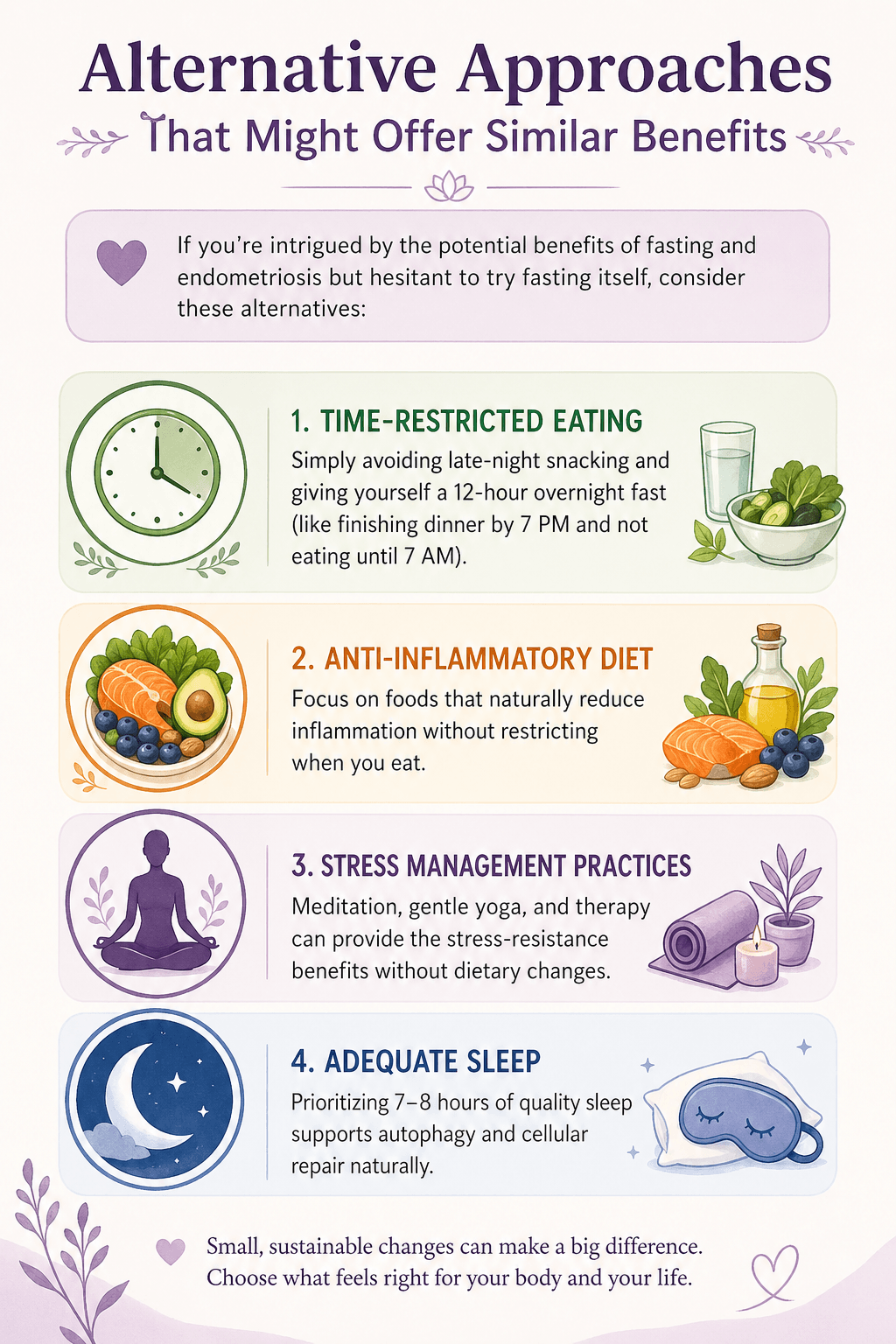
Alternative Approaches That Might Offer Similar Benefits
If you’re intrigued by the potential benefits of fasting and endometriosis but hesitant to try fasting itself, consider these alternatives:
- Time-restricted eating: Simply avoiding late-night snacking and giving yourself a 12-hour overnight fast (like finishing dinner by 7 PM and not eating until 7 AM)
- Anti-inflammatory diet: Focus on foods that naturally reduce inflammation without restricting when you eat
- Stress management practices: Meditation, gentle yoga, and therapy can provide the stress-resistance benefits without dietary changes
- Adequate sleep: Prioritizing 7-8 hours of quality sleep supports autophagy and cellular repair naturally
The Bottom Line on Fasting Endometriosis Management
The relationship between fasting and endometriosis is complex and highly individual. While emerging research and community experiences suggest potential benefits, particularly around inflammation reduction and improved symptom management, fasting isn’t a magic solution, and it’s not appropriate for everyone.
What I’ve learned through my diagnosis and journey with stage 3 endometriosis is that managing this condition requires a personalized, multifaceted approach. For some women, intermittent fasting might be a valuable tool. For others (like me, at least for now), focusing on other dietary and lifestyle strategies feels more appropriate.
The most important thing is that you have options. You’re not powerless in the face of endometriosis. Whether you explore fasting, adopt an anti-inflammatory diet, work with specialists to find the right medical treatments, or combine multiple approaches, you’re actively participating in your own care and wellbeing.