
If you’ve been told you have a thin uterine lining, or you’re trying to understand what’s happening during your menstrual cycle, you’re not alone. The lining of the womb thin symptom is something many women experience, and understanding it can help you advocate for better care and make informed decisions about your health.
Today, I want to share what I’ve learned about uterine lining thickness, what’s normal, what’s not, and how this relates to conditions like endometriosis and overall reproductive health.
Understanding Your Uterine Lining and Menstruation
The shedding of the lining of the uterus is called menstruation, your period. Every month, your body builds up the endometrial lining in preparation for a potential pregnancy. When pregnancy doesn’t occur, this lining breaks down and sheds, which is what we experience as our menstrual flow.
But here’s what many of us don’t realize: the thickness of that lining matters significantly. A healthy uterine lining typically measures between 8-13mm during the late proliferative phase of your cycle. When the lining is too thin (generally less than 7mm), it can indicate hormonal imbalances, stress, nutritional deficiencies, or underlying conditions like endometriosis.
Can Your Uterus Lining Come Out in Pieces?
One question I’ve heard from many sisters in our community is: can your uterus lining come out in noticeable pieces? The answer is yes, and it’s more common than you might think. During menstruation, you’re essentially passing lining of uterus tissue mixed with blood.
Sometimes you might notice what looks like uterine lining fleshy tissue during period, small, dark red or brown clots or tissue-like pieces. This is usually normal menstrual tissue, but when the pieces are larger or accompanied by severe pain, it could indicate something more. For those of us with endometriosis, heavy periods with larger tissue fragments are particularly common because our bodies often produce excess inflammatory proteins that affect how the lining sheds.
I remember the first time I noticed larger pieces of tissue during my period—I was terrified. I didn’t know if this was normal or if something was seriously wrong. Now I understand that while some tissue passing is normal, the size, frequency, and accompanying symptoms matter.
The Connection Between Endometriosis Lining Thickness and Fertility
Here’s where things get complicated for those of us dealing with reproductive health issues. You’d think that a condition like endometriosis involving endometrial-like tissue would mean we have thick uterine linings, right? Actually, endometriosis lining thickness can vary significantly, and some women with endometriosis actually have thinner-than-normal uterine linings.
This happens for several reasons:
- Hormonal imbalances: Endometriosis disrupts normal hormone production, particularly progesterone, which is essential for building a healthy uterine lining
- Inflammatory environment: The chronic inflammation from endometriosis can affect how the uterine lining develops
- Medications: Many treatments for endometriosis, including birth control pills and GnRH agonists, can thin the uterine lining as part of their mechanism to reduce symptoms
- Surgical interventions: Sometimes surgeries for endometriosis can affect the endometrium, particularly if you’ve had multiple procedures
Understanding the relationship between uterine lining health and conditions like endometriosis is crucial, especially for women thinking about future fertility. A thin lining can make it harder for an embryo to implant, which is why this matters so much for those trying to conceive.
What Causes Lining of the Womb Thin Symptom?
Beyond endometriosis, several factors can contribute to a thin uterine lining:
- Hormonal imbalances: Low estrogen levels are the primary cause of thin endometrial lining
- Poor blood flow: Inadequate circulation to the uterus can prevent proper lining development
- Chronic stress: Prolonged stress affects hormone production and can thin the lining
- Nutritional deficiencies: Lack of key nutrients like vitamin E, L-arginine, and omega-3 fatty acids
- Age: As we get older, especially approaching perimenopause, the lining naturally becomes thinner
- Medications: Clomid, some birth control pills, and other hormonal medications can thin the lining
Understanding that multiple factors can affect uterine lining thickness was eye-opening for me. It helped me have more informed conversations with my healthcare team about treatment options and lifestyle modifications.
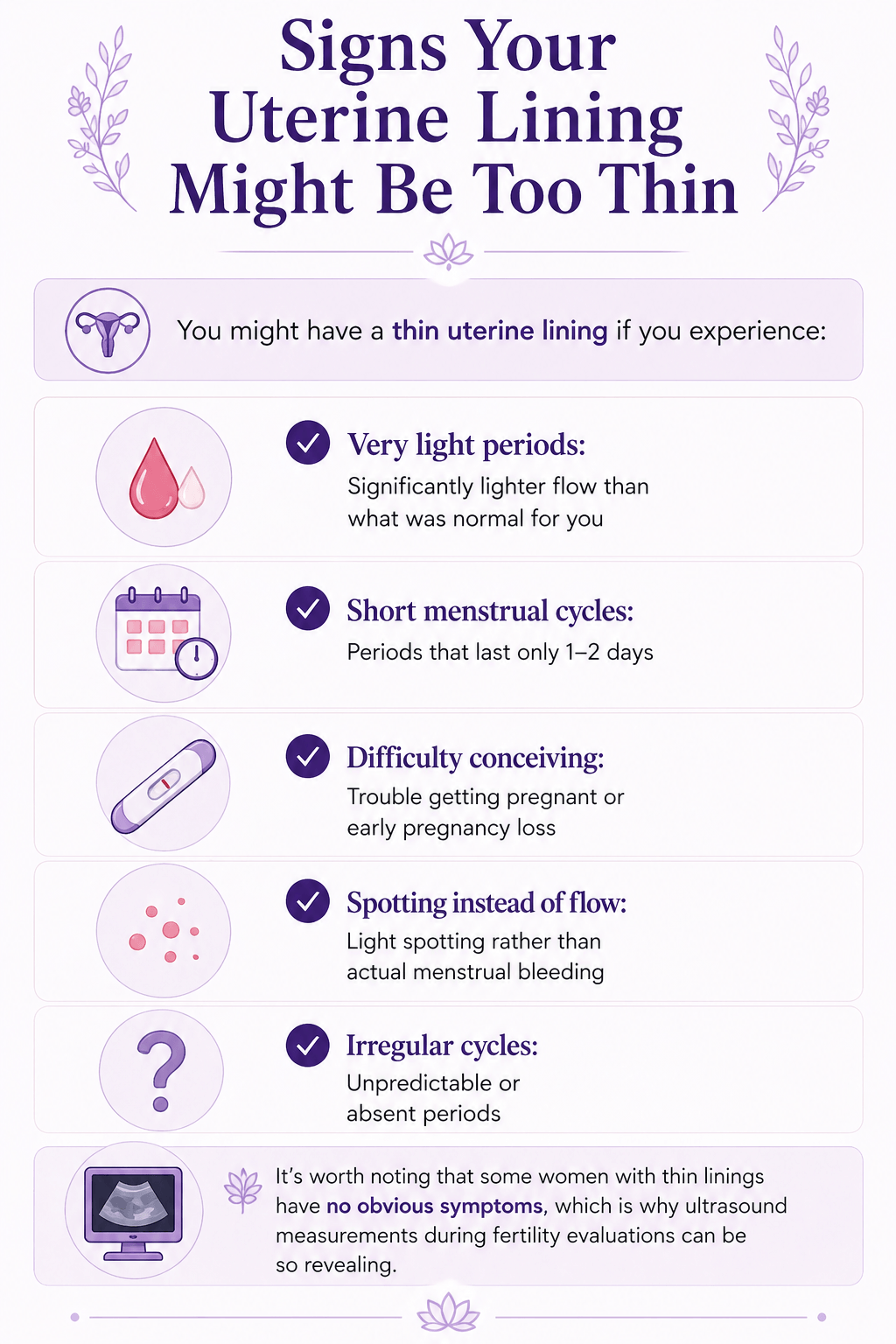
Signs Your Uterine Lining Might Be Too Thin
You might have a thin uterine lining if you experience:
- Very light periods: Significantly lighter flow than what was normal for you
- Short menstrual cycles: Periods that last only 1-2 days
- Difficulty conceiving: Trouble getting pregnant or early pregnancy loss
- Spotting instead of flow: Light spotting rather than actual menstrual bleeding
- Irregular cycles: Unpredictable or absent periods
It’s worth noting that some women with thin linings have no obvious symptoms, which is why ultrasound measurements during fertility evaluations can be so revealing.
How to Support a Healthy Uterine Lining
While I’m still navigating this journey myself, here are evidence-based strategies that can help support uterine lining health:
- Improve circulation: Regular exercise, particularly yoga and walking, can enhance blood flow to the pelvic area
- Nutrition matters: Focus on foods rich in vitamin E (nuts, seeds, leafy greens), omega-3 fatty acids (fish, flaxseed), and iron (especially important if you have heavy periods)
- Stay hydrated: Proper hydration supports healthy blood volume and circulation
- Manage stress: Chronic stress affects hormone production; prioritize stress-reduction techniques like meditation or therapy
- Consider supplements: After consulting with your doctor, supplements like L-arginine, vitamin E, and omega-3s may help
- Acupuncture: Some studies suggest acupuncture can improve blood flow to the uterus and support lining development
I’ve been more intentional about nutrition and stress management, and while I can’t say definitively how it’s affected my lining thickness, I do feel better overall, and that matters too.
When to Talk to Your Doctor
If you’re concerned about your uterine lining, especially if you have endometriosis or other reproductive health conditions, it’s important to have open conversations with your healthcare provider. Seek medical attention if you experience:
- Extremely light periods that represent a significant change from your normal
- Difficulty conceiving after six months to a year of trying
- Uterine lining coming out in very large pieces (larger than a quarter)
- Severe pain accompanying tissue passage
- Irregular bleeding or spotting between periods
Your doctor can order a transvaginal ultrasound to measure your endometrial thickness at different points in your cycle. This information can guide treatment decisions, especially if you’re trying to conceive or experiencing problematic symptoms.
Understanding the Complexity of Uterine Health
One of the most challenging aspects of reproductive health conditions is how they affect multiple body systems in ways we don’t always expect. The relationship between endometriosis lining thickness isn’t straightforward—some women have thick linings, others have thin, and many fall somewhere in between.
What I’ve learned through my journey is that knowledge is power. Understanding how passing lining of uterus tissue works during menstruation, what’s normal versus concerning, and how conditions like endometriosis can affect these processes helps us advocate for better care.
If you’re struggling with fertility concerns related to thin uterine lining or experiencing unusual menstrual symptoms, please know you’re not alone. This is a complex issue, but there are treatment options and lifestyle modifications that can help.
Finding Hope in the Journey
Sisters, whether you’re dealing with lining of the womb thin symptom, heavy periods with tissue passage, or the countless other ways reproductive health conditions affect our bodies, remember that every piece of knowledge brings us closer to better management and care.
I’ve become more attuned to my body’s signals and more proactive about asking questions. Understanding that the shedding of the lining of the uterus is called menstruation but that the quality and quantity of that shedding matters has empowered me to have better conversations with my medical team.
Your experience matters, your questions are valid, and together we can navigate these complex issues. Share your story in our community support forum so we can continue learning from and supporting each other.
Frequently Asked Questions About Uterine Lining
What does it mean if I have a thin uterine lining?
A thin uterine lining typically means your endometrium measures less than 7-8mm when it should be thicker during certain phases of your cycle. This can result from hormonal imbalances, poor circulation, medications, stress, or conditions like endometriosis. A thin lining can affect menstrual flow and make conception more difficult.
Is it normal for uterine lining to come out during your period?
Yes, uterine lining coming out during menstruation is completely normal—that’s what a period is. You’re shedding the endometrial tissue that built up during your cycle. You might notice small clots or tissue-like pieces, which is typically normal. However, very large pieces (larger than a quarter) or severe pain should be discussed with your doctor.
What is the shedding of the uterine lining called?
The shedding of the lining of the uterus is called menstruation or your menstrual period. This process occurs approximately every 28 days (though cycles vary) when pregnancy doesn’t occur, causing the endometrial lining to break down and exit the body through the vagina.
Can you see uterine lining when it comes out?
Yes, you can sometimes see uterine lining fleshy tissue during period in your menstrual flow. It may appear as dark red or brownish tissue-like pieces or clots. Small pieces are normal, but if you’re regularly passing lining of uterus in large, noticeable chunks accompanied by severe cramping, it could indicate conditions like endometriosis, fibroids, or adenomyosis.
How does endometriosis affect uterine lining thickness?
Endometriosis lining thickness can be affected in complex ways. While endometriosis involves endometrial-like tissue growing outside the uterus, it can cause hormonal imbalances and inflammation that may thin the actual uterine lining. Additionally, many endometriosis treatments intentionally thin the lining to reduce symptoms. This paradox can affect fertility and menstrual patterns.
Can your uterus lining come out all at once?
Can your uterus lining come out completely in one piece? In rare cases, women can pass what’s called a decidual cast—where the entire uterine lining comes out intact, shaped like the uterus. This is uncommon and usually very painful. More typically, the lining sheds gradually over several days during menstruation, sometimes with noticeable tissue pieces mixed with blood.
How can I naturally thicken my uterine lining?
To support healthy lining development, focus on improving blood flow through exercise, eating nutrient-rich foods (especially vitamin E, omega-3s, and iron), staying hydrated, managing stress, and getting adequate sleep. Some women benefit from supplements like L-arginine or vitamin E, but always consult your doctor first, especially if you have endometriosis or are trying to conceive.