
When I woke up that morning in November 2025, doubled over in pain just days after my surgery, I finally had answers… stage 3 endometriosis. But what I didn’t expect was how much this diagnosis would teach me about my body’s unique language. If you’re reading this, you’re probably intimately familiar with that sudden, gripping sensation when an endo flare strikes. You know that feeling when your insides seem to tense up, the pain radiates through your abdomen, and you’re left wondering what you did to trigger it this time.
What causes endometriosis flare ups isn’t a simple answer, and that’s what I want to explore with you today. Through my own journey, filled with trial, error, and countless notes on my phone tracking every symptom—I’ve discovered that flare-ups are deeply personal, yet we share common threads that can help us navigate this challenging condition together.
Understanding What Is an Endometriosis Flare Up
Before my diagnosis, I didn’t have words for what was happening to my body. An endometriosis flare up is essentially an episode where your symptoms intensify dramatically—sometimes without warning, sometimes with clear triggers. For me, it feels like my stomach insides are tensing up, starting to hurt in a way that makes me feel like I desperately need to use the bathroom, but I can’t.
It’s that anxiety feeling, that I get anxiety from having it. If that makes sense, it’s this sensation that just… pops up. I honestly can’t fully describe it, but if you have endo, you probably know exactly what I mean. My hands start sweating, my heart starts racing. I feel like throwing up. And I can feel it coming a couple of days before, or moments before.
Endo flare up symptoms vary from person to person, but common experiences include severe pelvic pain, intense bloating, fatigue that feels like you’re moving through mud, digestive issues, and back pain that radiates down your legs. Since my surgery, I’ve become much more attuned to recognizing the early warning signs, that slight tightening in my left side, the subtle shift in my energy level, the way my body just feels… off.
When Does Endometriosis Flare Up: Recognizing Your Patterns
One of the most empowering things I’ve done since my diagnosis is track when does endometriosis flare up for me specifically. While many women experience symptoms of endometriosis flare-up around their menstrual cycle due to hormonal fluctuations, I’ve learned that my triggers extend far beyond my period.
I’ve experienced endometriosis flare up without period countless times. I thought endo pain was supposed to be cyclical, tied to menstruation. But the reality is that endometriosis creates a state of chronic inflammation in your body, and various factors can ignite that inflammation at any time. I no longer started to only feel pain during period, it was everyday now. The flare could come up everyday, at least that’s how I feel.
What Causes Endo Flare Ups: My Personal Trigger Map
The Food Connection: My Biggest Discovery
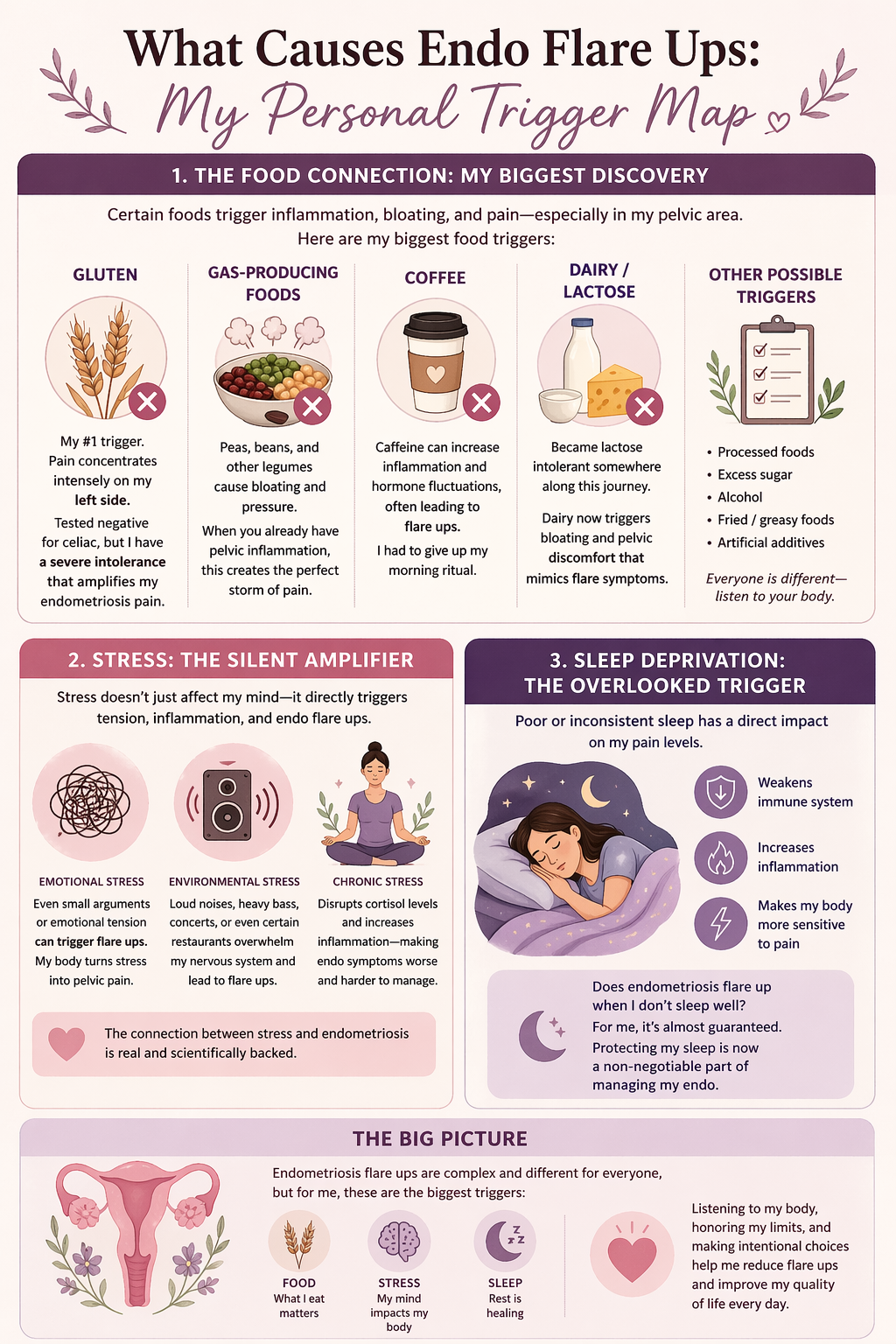
Endometriosis flare up triggers related to food have been my most significant learning curve. Through painful trial and error, I’ve identified several foods that consistently cause problems for me.
Gluten is my number one trigger, and interestingly, what does an endometriosis flare feel like when I eat gluten is pain concentrated intensely on my left side. It hurt so much that I actually talked to doctors and people who are celiac because the symptoms seemed so similar. I tested myself for celiac disease, and it turns out I’m not celiac. So what I’ve concluded is that I have a really bad intolerance to gluten that interacts with my endometriosis in a way that amplifies my pain.
Gas-producing foods are another major culprit for me. Peas, beans, and other legumes that cause bloating trigger immediate discomfort. When you already have inflammation in your pelvic cavity, adding gas and bloating to the mix creates this perfect storm of pressure and pain.
Coffee, as much as I loved my morning ritual, became something I had to reconsider. The caffeine can increase inflammation and hormone fluctuations, contributing to endo flare episodes.
I also became lactose intolerant somewhere along this journey, whether it’s related to the endometriosis itself or the chronic inflammation affecting my gut, I’m not entirely sure. But dairy now joins the list of foods that can trigger bloating and pelvic discomfort that closely mimics my endometriosis flare symptoms.
Stress: The Silent Amplifier
Can endometriosis flare up from stress alone? In my experience, absolutely yes. I’ve noticed that even a small argument with my husband can trigger endo flare ups. It’s like my body physically manifests emotional tension directly into pelvic pain.
But it’s not just emotional stress. I discovered that being in environments with loud noises and heavy bass, like at concerts or even certain restaurants, causes my endo to flare up. My body tenses, my nervous system goes into overdrive, and within hours, I’m dealing with the familiar pain and discomfort.
The connection between stress and endometriosis is real and scientifically backed. Chronic stress disrupts your body’s stress-response system and alters cortisol levels, which can worsen the inflammatory response that’s already happening with endometriosis.
Sleep Deprivation: The Overlooked Trigger
Not getting regular sleep has a direct impact on my belly pain. Does endometriosis flare up when I don’t sleep well? For me, it’s almost guaranteed. Poor sleep weakens your immune system and makes your body more sensitive to pain. It also increases inflammation throughout your body, which for those of us with endo, means more intense and frequent flare-ups.
I’ve had to become much more protective of my sleep schedule, even when it means saying no to social events or rearranging my commitments.
What Does an Endometriosis Flare Up Feel Like
Symptoms of endometriosis flare up aren’t just physical, though the physical symptoms are certainly dominant. For me, endo flare symptoms include:
- Intense cramping and pelvic pain that feels different from regular period cramps
- Severe bloating that makes me look pregnant
- Sharp, stabbing pains on my left side (especially after gluten)
- Digestive issues, including constipation or urgent bathroom needs
- Fatigue that’s almost debilitating
- Brain fog and difficulty concentrating
- Emotional sensitivity and mood changes
The emotional toll is something we don’t talk about enough. When you’re in the middle of an endo flare, it’s not just your body that’s struggling, it’s your mental health, your relationships, your work, your entire life.
How Long Does a Endometriosis Flare Up Last?
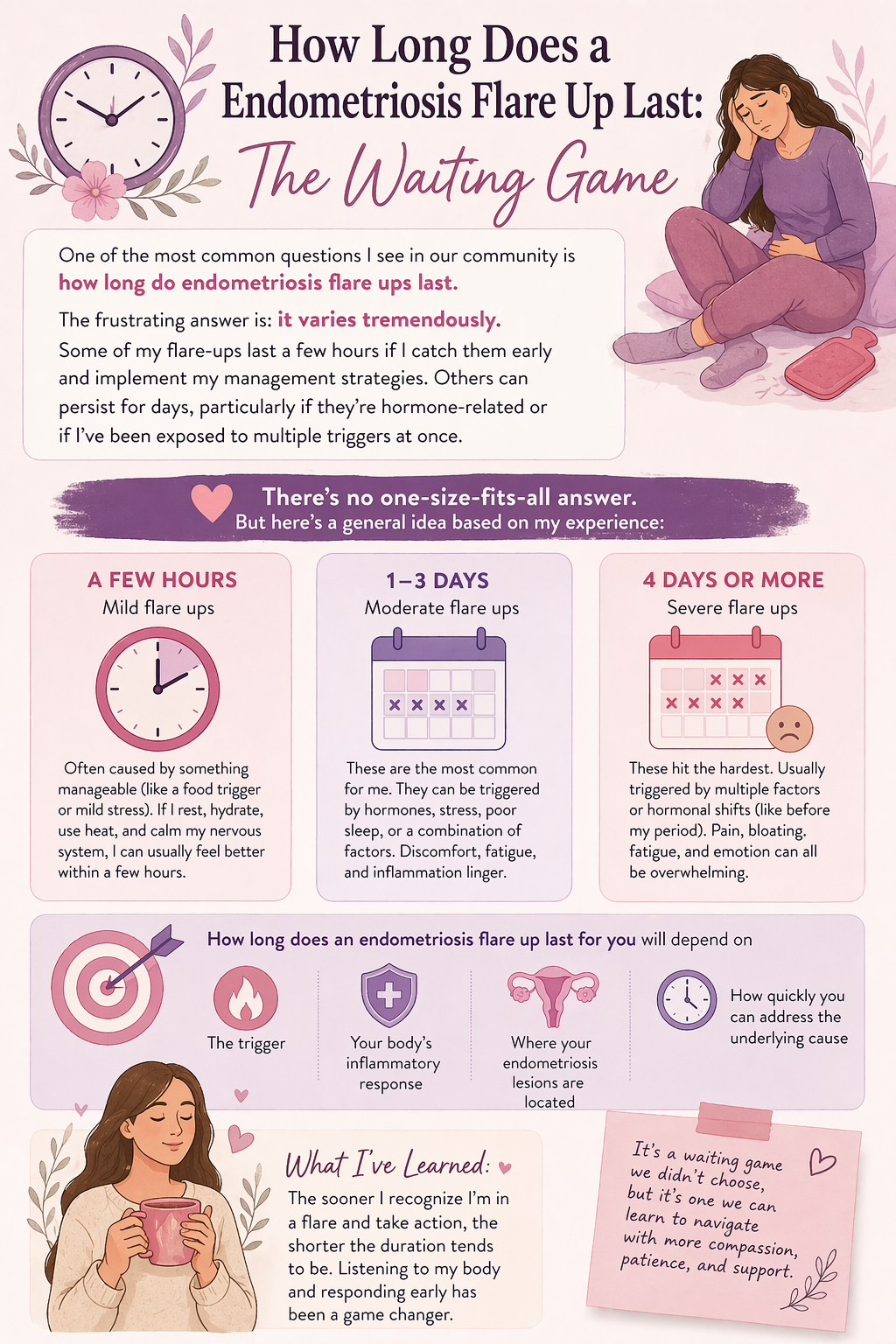
One of the most common questions I see in our community is how long do endometriosis flare ups last. The frustrating answer is: it varies tremendously. Some of my flare-ups last a few hours if I catch them early and implement my management strategies. Others can persist for days, particularly if they’re hormone-related or if I’ve been exposed to multiple triggers at once.
How long does an endometriosis flare up last for you will depend on the trigger, your body’s inflammatory response, where your endometriosis lesions are located, and how quickly you can address the underlying cause. I’ve learned that the sooner I recognize I’m in a flare and take action, the shorter the duration tends to be.
What Helps with Endometriosis Flare Ups: My Relief Toolkit
Managing endometriosis flare episodes requires a multi-faceted approach.
Here’s what works for me:
Immediate Relief Strategies:
- Heat therapy using a heating pad on my lower abdomen and back
- Gentle movement like slow walking when the pain allows
- Rest in a comfortable position (usually curled on my left side)
- Deep breathing exercises to calm my nervous system
- Anti-inflammatory foods like ginger tea and turmeric
- Magnesium supplements (always consult your doctor first)
Long-Term Prevention:
- Strict avoidance of my known food triggers (gluten, dairy, gassy foods, coffee)
- Maintaining a consistent sleep schedule of 7-8 hours
- Regular stress management through meditation and therapy
- Anti-inflammatory diet rich in omega-3 fatty acids and vegetables
- Tracking my symptoms in a journal to identify patterns
When to Seek Help: Endometriosis Flare Up Hospital Visits
Not every flare-up requires medical intervention, but it’s important to know when to seek help. I’ve learned that endometriosis flare up hospital visits become necessary when:
- Pain is unmanageable with your usual methods
- You’re vomiting or unable to keep down fluids
- You have a fever, which could indicate infection
- You’re experiencing severe bleeding
- Your symptoms are different or more severe than usual
Don’t hesitate to advocate for yourself in medical settings. Since my diagnosis, I’ve become more confident in explaining my condition and insisting on appropriate care when I need it.
Building Your Personal Understanding
What I’ve learned through my journey with stage 3 endometriosis is that understanding what causes endometriosis flare ups for YOU specifically is empowering. We’re all sisters in this struggle, but our bodies are unique. What triggers my flare-ups might not trigger yours, and vice versa.
I encourage you to start your own tracking system. Note what you eat, your stress levels, your sleep quality, where you are in your cycle, environmental factors, and how you feel. Over time, patterns will emerge. You’ll start to see the connections between your triggers and your symptoms.
This knowledge won’t cure your endometriosis, but it will give you a sense of control in a condition that often feels uncontrollable. It will help you make informed decisions about your diet, lifestyle, and self-care practices.
Moving Forward Together
Living with endometriosis means accepting that some days will be harder than others. Since my surgery and diagnosis, I’ve had to completely reimagine my relationship with my body. Instead of fighting against it or feeling betrayed by it, I’m learning to listen to what it’s telling me.
Every endo flare is an opportunity to learn something new about your triggers and your resilience. Yes, the pain is real and it’s valid, but so is your strength. You’re navigating a complex, chronic condition that medical science is still working to fully understand. That takes courage.
If you’re newly diagnosed or still waiting for answers, know that you’re not alone in this journey. The Endometriosis Sisters community is here to support you, share experiences, and remind you that you’re so much more than your diagnosis. Your pain is valid, your struggles are real, and your determination to find relief and live your best life despite this condition is inspiring.
Keep tracking, keep learning, keep advocating for yourself, and keep sharing your story. Together, we’re stronger than endometriosis.
Have you identified your personal endometriosis triggers? Share your experiences in the comments below or join our community to connect with other women navigating this journey. Your story might be exactly what another sister needs to hear today.