When one of my close friends texted me a photo of her face covered in painful cystic breakouts, along with the message, “Is this normal? Does this happen to you too?” I realized how many hidden symptoms of endometriosis we don’t talk about enough.
While I personally haven’t struggled with acne since my stage 3 endometriosis diagnosis in November 2025, watching my friend battle both pelvic pain and persistent skin issues opened my eyes to yet another way this condition affects our bodies.
Endometriosis acne is a real concern for many women in our community, and if you’re dealing with both endo and frustrating breakouts, you’re probably not imagining a connection.
Today, I want to explore the relationship between these two conditions and share what I’ve learned from research, medical experts, and the experiences of women like my friend who navigate both challenges.
Understanding Endometriosis and Acne: Is There Really a Link?
One of the most common questions I hear in our community is: can endometriosis cause acne? The answer is more nuanced than a simple yes or no.
Does endometriosis cause acne directly? Not exactly. Endometriosis itself doesn’t create acne in the way that, say, touching your face with dirty hands might cause a breakout. However, the hormonal imbalances that come with endometriosis, particularly the fluctuations in estrogen, progesterone, and androgenism, can absolutely contribute to developing or worsening acne.
Think of it this way: endometriosis and acne are like two separate conditions that share the same underlying trigger—hormonal chaos. When your hormones are out of balance because of endometriosis, your skin often reflects that internal turmoil.
The Hormonal Connection: Why Endometriosis and Acne Often Go Hand-in-Hand
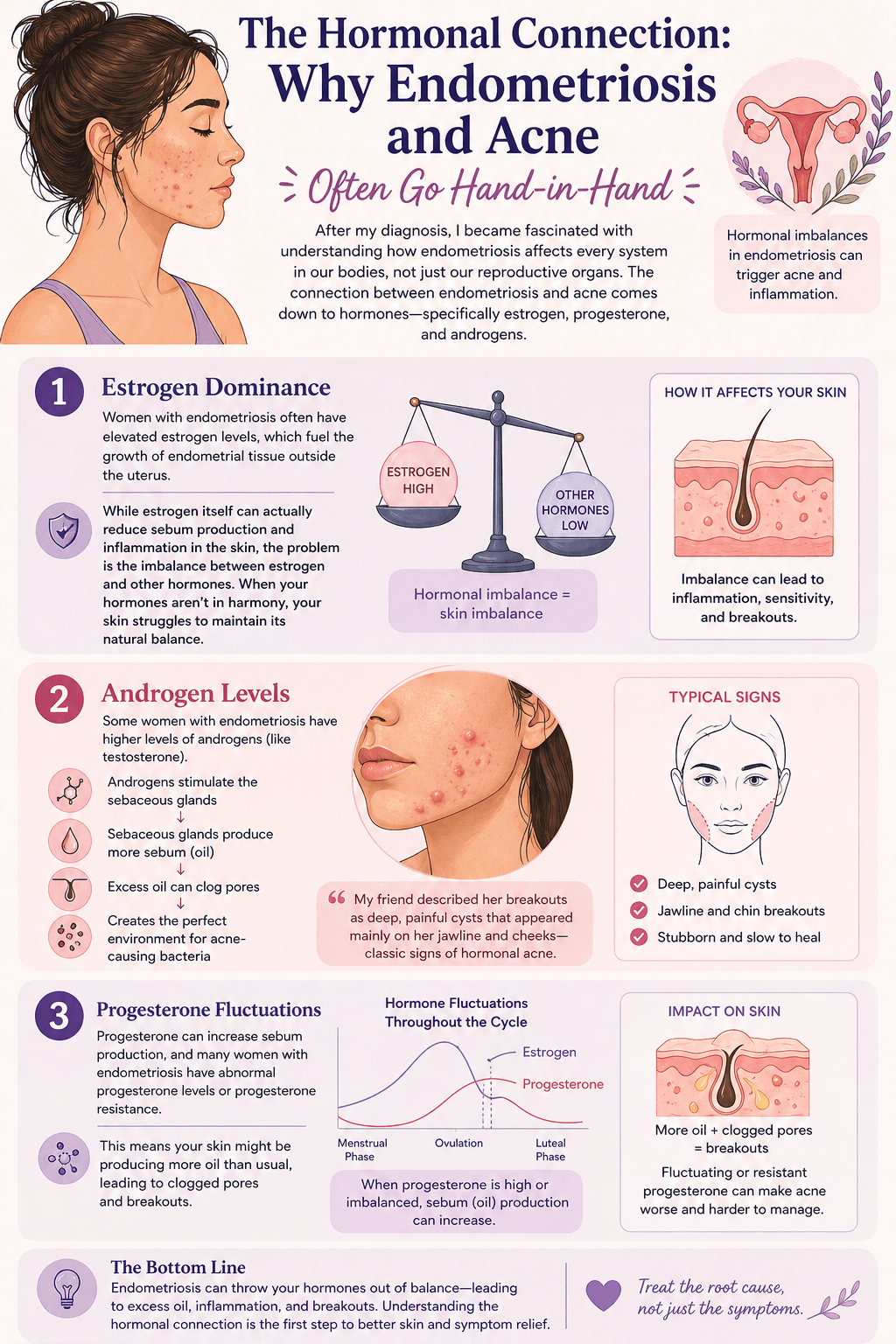
After my diagnosis, I became fascinated with understanding how endometriosis affects every system in our bodies, not just our reproductive organs. The connection between endometriosis and acne comes down to hormones, specifically estrogen, progesterone, and androgens.
Estrogen Dominance
Women with endometriosis often have elevated estrogen levels, which fuel the growth of endometrial tissue outside the uterus. While estrogen itself can actually reduce sebum production and inflammation in the skin, the problem is the imbalance between estrogen and other hormones. When your hormones aren’t in harmony, your skin struggles to maintain its natural balance.
Androgen Levels
Here’s where it gets particularly relevant for acne. Some women with endometriosis have higher levels of androgens (like testosterone), which stimulate the sebaceous glands to produce more sebum, that oily substance that can clog pores and create the perfect environment for acne-causing bacteria. My friend described her breakouts as deep, painful cysts that appeared mainly on her jawline and cheeks, which are classic signs of hormonal acne.
Progesterone Fluctuations
Progesterone can increase sebum production, and many women with endometriosis have abnormal progesterone levels or progesterone resistance. This means your skin might be producing more oil than usual, leading to clogged pores and breakouts.
Will Endometriosis Cause Acne for Everyone?
This is an important distinction: will endometriosis cause acne in every woman who has the condition? Absolutely not.
I’m living proof that you can have stage 3 endometriosis and not struggle with acne. My skin has remained relatively clear throughout my journey. However, I’ve watched my friend, who also has endometriosis, battle persistent breakouts that seem to worsen during her flare-ups and around her menstrual cycle.
The reality is that endometriosis affects each of us differently. Just like some women experience primarily digestive symptoms while others have severe pelvic pain, the manifestation of hormonal imbalances varies from person to person. Your genetics, diet, stress levels, immune system function, and even the treatments you’re using all play a role in whether you develop acne alongside endometriosis.
Types of Acne Associated with Endometriosis
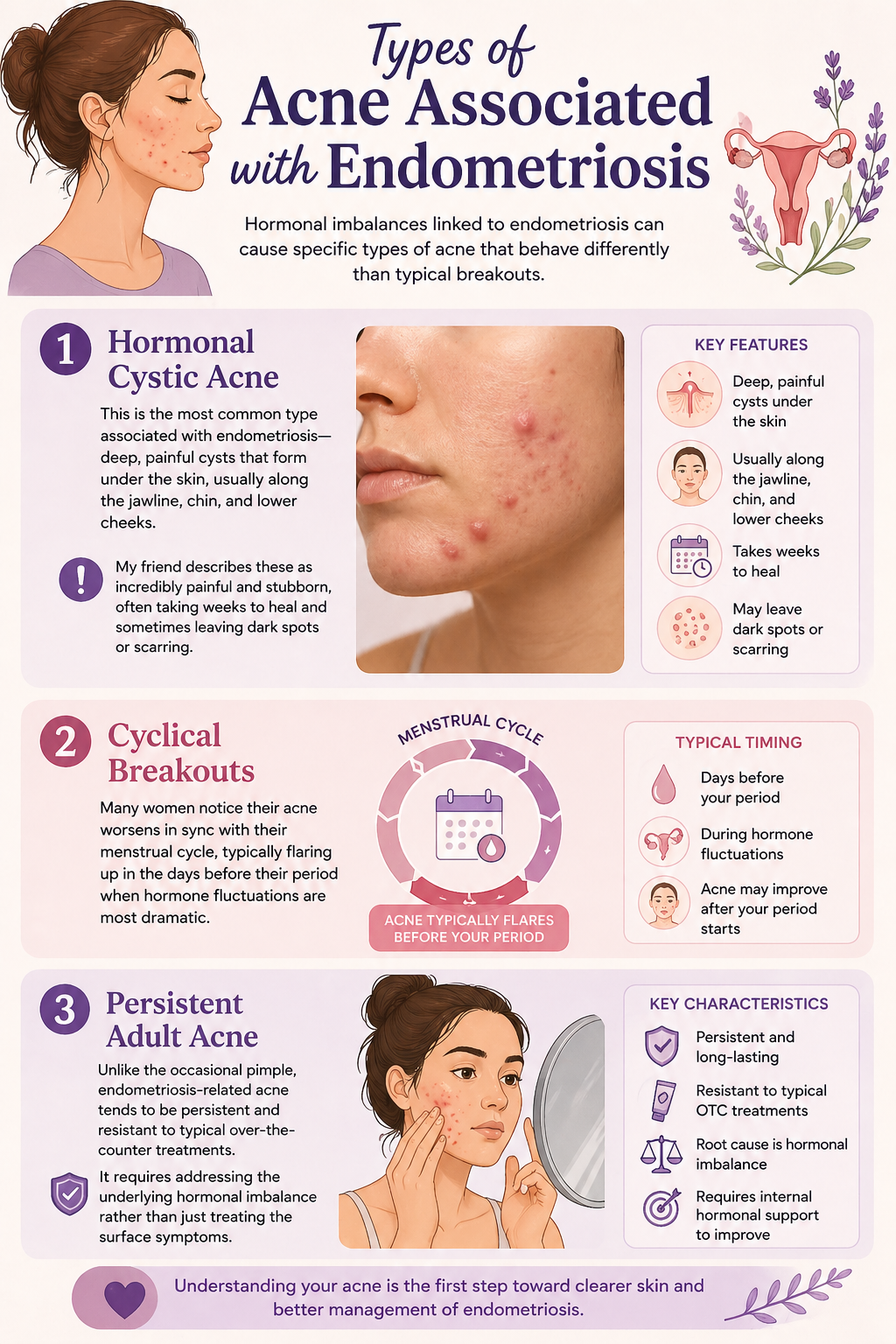
From conversations with my friend and research into this topic, I’ve learned that endometriosis acne typically appears as:
Hormonal Cystic Acne
This is the most common type associated with endometriosis, deep, painful cysts that form under the skin, usually along the jawline, chin, and lower cheeks. My friend describes these as incredibly painful and stubborn, often taking weeks to heal and sometimes leaving dark spots or scarring.
Cyclical Breakouts
Many women notice their acne worsens in sync with their menstrual cycle, typically flaring up in the days before their period when hormone fluctuations are most dramatic.
Persistent Adult Acne
Unlike the occasional pimple, endometriosis-related acne tends to be persistent and resistant to typical over-the-counter treatments. It requires addressing the underlying hormonal imbalance rather than just treating the surface symptoms.
The Treatment Complication: When Endo Medications Affect Your Skin
Here’s something that frustrated my friend immensely: sometimes the treatments for endometriosis can actually worsen acne.
Hormonal birth control, which is commonly prescribed to manage endometriosis symptoms, can be a double-edged sword for your skin. Some formulations help clear acne by regulating hormones, while others (particularly those with higher androgen activity) can make breakouts worse.
GnRH agonists like Lupron, another common endometriosis treatment, work by creating a temporary menopause-like state. While this can help manage endo symptoms, the hormonal changes can also impact your skin.
This is why it’s crucial to communicate with your healthcare team about all your symptoms, including skin issues. There may be treatment options that address both your endometriosis and your acne more effectively.
Other Skin Issues Beyond Acne
While we’re focusing on endometriosis acne, I want to briefly mention that endometriosis can affect your skin in other ways too:
- Increased skin sensitivity and reactivity
- Hives or skin rashes due to immune system hypersensitivity
- Eczema or dermatitis, particularly in women with immune dysregulation
- Post-inflammatory hyperpigmentation (dark spots after breakouts heal)
- Uneven skin tone due to hormonal fluctuations affecting melanin production
My friend has also dealt with occasional hives during her worst flare-ups, which her doctor explained is related to the inflammatory nature of endometriosis and how it affects the immune system.
Managing Endometriosis-Related Acne: Strategies That Help
Based on my friend’s experience and the research I’ve done, here are strategies that can help manage endometriosis acne:
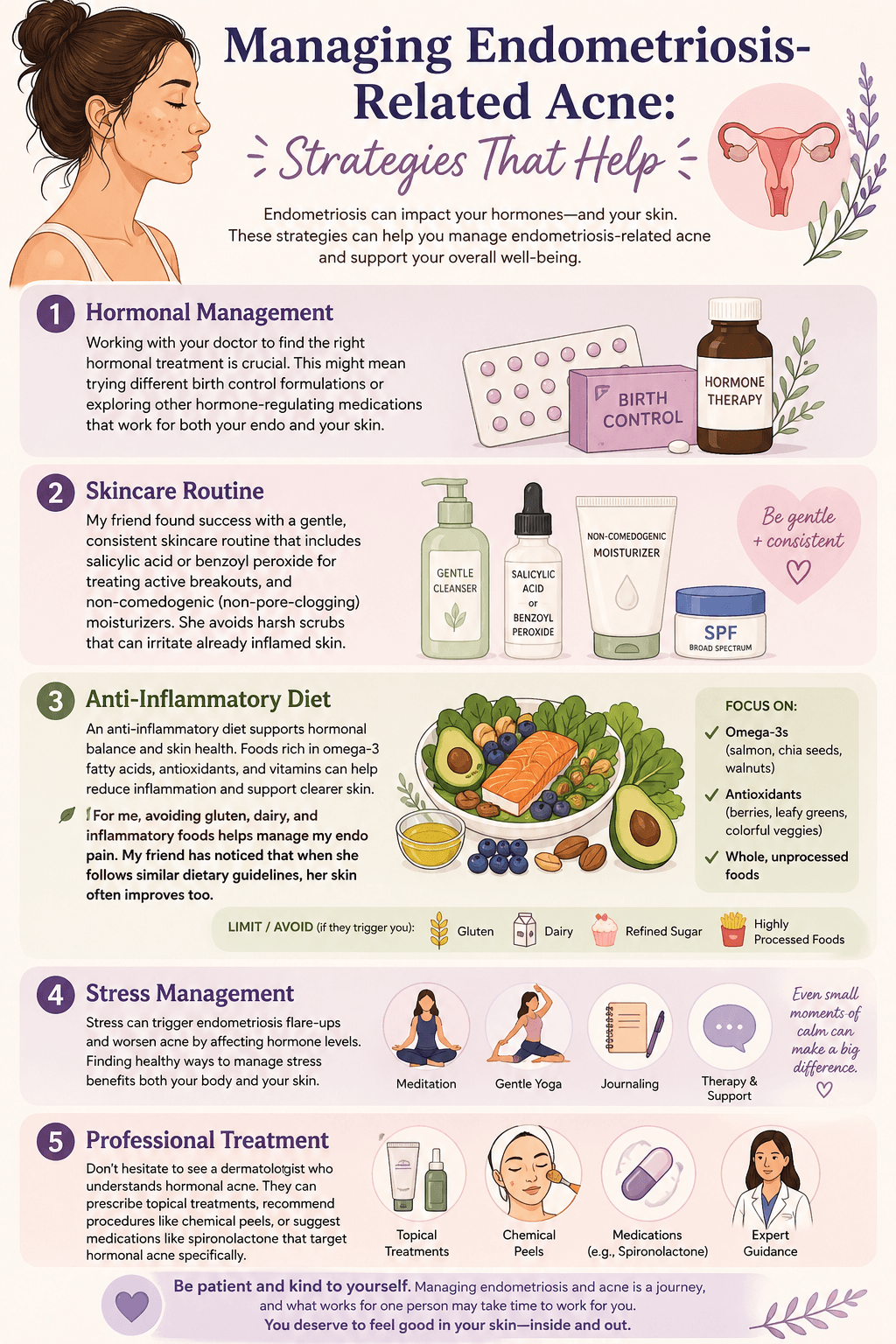
Hormonal Management
Working with your doctor to find the right hormonal treatment is crucial. This might mean trying different birth control formulations or exploring other hormone-regulating medications that work for both your endo and your skin.
Skincare Routine
My friend found success with a gentle, consistent skincare routine that includes salicylic acid or benzoyl peroxide for treating active breakouts, and non-comedogenic (non-pore-clogging) moisturizers. She avoids harsh scrubs that can irritate already inflamed skin.
Anti-Inflammatory Diet
While I don’t personally struggle with acne, I do notice that my anti-inflammatory diet—which I follow to manage my endo symptoms—seems to benefit my overall skin health. Foods rich in omega-3 fatty acids, antioxidants, and vitamins support both hormonal balance and skin health.
For me, avoiding gluten, dairy, and inflammatory foods helps manage my endo pain. My friend has noticed that when she follows similar dietary guidelines, her skin often improves too.
Stress Management
I’ve learned firsthand how stress triggers my endometriosis flare-ups, even something like an argument with my husband or being in a loud environment can set off my symptoms. Stress also impacts hormone levels and can worsen acne. Finding healthy stress management techniques like meditation, gentle yoga, or therapy benefits both conditions.
Professional Treatment
Don’t hesitate to see a dermatologist who understands hormonal acne. They can prescribe topical treatments, recommend procedures like chemical peels, or suggest medications like spironolactone that target hormonal acne specifically.
The Inflammation Connection
Since my diagnosis, I’ve become acutely aware of inflammation in my body. Endometriosis is fundamentally an inflammatory condition—those misplaced endometrial tissues create chronic inflammation in the pelvic cavity.
That same inflammatory response doesn’t stay confined to your pelvis. Systemic inflammation affects your entire body, including your skin. When inflammation is high, your immune system is in overdrive, and your skin becomes more reactive and prone to breakouts.
This is one reason why managing inflammation through diet, stress reduction, and adequate sleep (which I’ve learned is crucial for my endo management) can have positive effects beyond just pelvic pain—it can improve your skin too.
When to Seek Help
While acne might seem like a minor concern compared to the debilitating pain of endometriosis, it deserves attention and treatment. Persistent acne affects your self-esteem, your confidence, and your quality of life.
Reach out to healthcare providers if:
- Your acne is painful, deep, or cystic
- Over-the-counter treatments aren’t helping after 2-3 months
- Your breakouts are leaving significant scarring or hyperpigmentation
- You suspect your endometriosis treatments are worsening your acne
- Your skin issues are affecting your mental health
Remember, you don’t have to just accept acne as another burden of endometriosis. There are treatments and strategies that can help.
My Friend’s Journey
Watching my friend navigate both endometriosis and persistent acne has been eye-opening. While I deal with severe abdominal pain, food intolerances, and the other challenges that come with stage 3 endo, she has those same struggles plus the visible burden of skin issues.
She’s described feeling self-conscious during flare-ups when her face breaks out, adding an emotional layer to the physical pain she’s already experiencing. But she’s also found empowerment in understanding the connection, working with knowledgeable healthcare providers, and refusing to accept that acne is just something she has to live with.
Her persistence in finding the right combination of hormonal treatment, skincare, and lifestyle adjustments has paid off. While her acne hasn’t completely disappeared, it’s significantly improved, and she feels more in control of her body.
You’re Not Alone in This
Whether you’re dealing with endometriosis and acne or just one of these conditions, please know that your struggles are valid and you deserve comprehensive care. Our medical system often treats symptoms in isolation, your gynecologist focuses on your endo, your dermatologist focuses on your skin, but your body is an interconnected system.
The hormonal chaos that endometriosis creates doesn’t just affect your uterus and ovaries. It ripples through your entire body, potentially impacting your skin, your digestion (which I know all too well), your energy levels, your mood, and so much more.
Finding healthcare providers who understand these connections and treat you holistically makes all the difference. Don’t be afraid to advocate for yourself, ask questions about how your treatments might affect your skin, and seek help from multiple specialists when needed.
Moving Forward with Knowledge and Support
Since my surgery and diagnosis, I’ve committed myself to understanding every aspect of endometriosis—not just my own symptoms, but the full spectrum of how this condition affects the incredible women in our community. Learning about endometriosis acne through my friend’s experience has deepened my appreciation for how diverse and complex this condition truly is.
If you’re struggling with both endo and skin issues, I encourage you to connect with others who understand. Share your experiences, learn from each other’s strategies, and remember that managing endometriosis takes time.
You deserve care that addresses all your symptoms, not just the ones your doctor considers most pressing. Your quality of life matters, your confidence matters, and your skin health matters just as much as managing your pelvic pain.
Are you dealing with endometriosis-related acne? What strategies have helped you? Share your story in the comments below or join our Endometriosis Sisters community. Your experience might be exactly what another sister needs to hear today.