When my husband and I started seriously talking about trying to conceive after my stage 3 endometriosis diagnosis in November 2025, I felt a mixture of hope and fear. The questions kept me up at night: Could I get pregnant? Would my endometriosis make pregnancy more difficult? And perhaps most concerning, can endometriosis cause ectopic pregnancy?
I haven’t been pregnant yet, but as I navigate this journey toward motherhood with endometriosis, I’ve been doing extensive research to understand the risks, prepare myself emotionally, and make informed decisions. Today, I want to share what I’ve learned about endometriosis and ectopic pregnancy, not from personal experience, but from medical research, statistics, and conversations with healthcare providers who specialize in this area.
If you’re like me, planning for pregnancy while managing endometriosis, this information might help you feel more prepared and less alone in your concerns.
Understanding Ectopic Pregnancy
Before we explore endometriosis ectopic pregnancy connections, let’s clarify what an ectopic pregnancy actually is. An ectopic pregnancy occurs when a fertilized egg implants outside the uterine cavity, most commonly in the fallopian tube (about 98% of cases).
In the general population, ectopic pregnancies occur in approximately 1 in 100 pregnancies, or about 2% of all pregnancies. While this might sound reassuring, the truth is that ectopic pregnancies are serious medical emergencies that can be life-threatening if not diagnosed and treated promptly.
An ectopic pregnancy cannot develop into a viable pregnancy. The embryo cannot survive outside the uterus, and as it grows, it can cause the fallopian tube to rupture, leading to severe internal bleeding, significant pain, and potentially fatal complications if left untreated.
Does Endometriosis Cause Ectopic Pregnancy? The Research
This is the question that weighs heavily on my mind as I plan for pregnancy. Does endometriosis cause ectopic pregnancy? The answer, based on the most current research, is that endometriosis significantly increases the risk.
A comprehensive meta-analysis published in January 2026, examined the association between endometriosis and adverse reproductive outcomes across multiple studies. The findings were eye-opening and important for those of us planning pregnancies.
The Statistics says that:
Women with endometriosis face approximately double the risk of ectopic pregnancy compared to women without the condition. While the general population experiences ectopic pregnancy in about 1 in 100 pregnancies, women with endometriosis face a risk of approximately 1 in 50 pregnancies.
The 2026 study found that the risk is particularly elevated in Caucasian populations, with a relative risk of 2.919. The research showed that women with endometriosis experienced a 76% higher risk for miscarriage and nearly three times higher risk for ectopic pregnancy compared to controls.
These statistics are sobering, but it’s important to keep perspective: even with doubled risk, the majority of pregnancies in women with endometriosis will not be ectopic. Understanding the risk helps us be vigilant and seek early prenatal care, not panic.
Why Endometriosis and Ectopic Pregnancy Are Connected
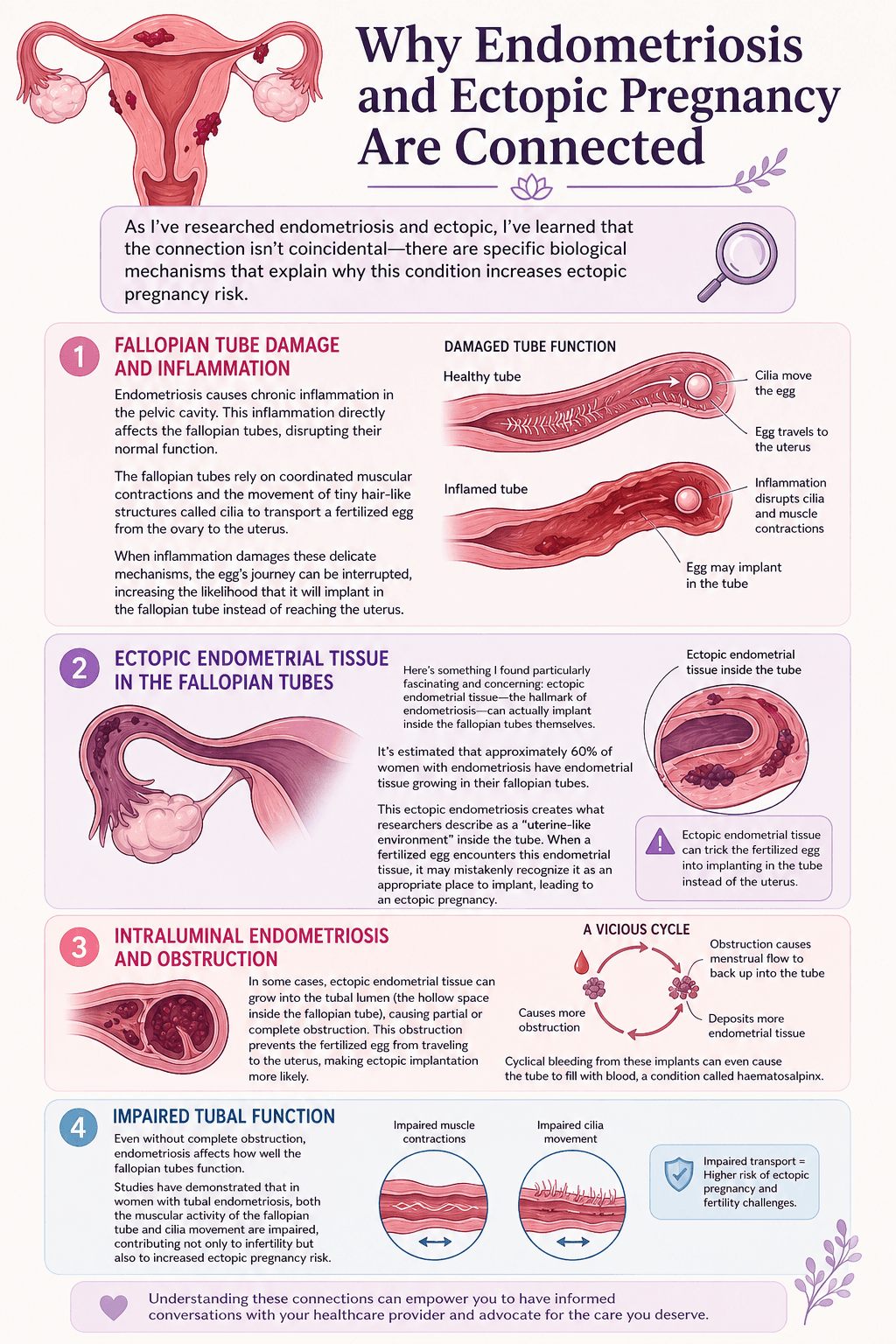
As I’ve researched endometriosis and ectopic pregnancy, I’ve learned that the connection isn’t coincidental; there are specific biological mechanisms that explain why this condition increases ectopic pregnancy risk.
Fallopian Tube Damage and Inflammation
Endometriosis causes chronic inflammation in the pelvic cavity. This inflammation directly affects the fallopian tubes, disrupting their normal function. The fallopian tubes rely on coordinated muscular contractions and the movement of tiny hair-like structures called cilia to transport a fertilized egg from the ovary to the uterus.
When inflammation damages these delicate mechanisms, the egg’s journey can be interrupted, increasing the likelihood that it will implant in the fallopian tube instead of reaching the uterus.
Ectopic Endometrial Tissue in the Fallopian Tubes
Here’s something I found particularly fascinating and concerning: ectopic endometrial tissue—the hallmark of endometriosis—can actually implant inside the fallopian tubes themselves. It’s estimated that approximately 60% of women with endometriosis have endometrial tissue growing in their fallopian tubes.
This ectopic endometriosis creates what researchers describe as a “uterine-like environment” inside the tube. When a fertilized egg encounters this endometrial tissue, it may mistakenly recognize it as an appropriate place to implant, leading to an ectopic pregnancy.
Intraluminal Endometriosis and Obstruction
In some cases, ectopic endometrial tissue can grow into the tubal lumen (the hollow space inside the fallopian tube), causing partial or complete obstruction. This obstruction prevents the fertilized egg from traveling to the uterus, making ectopic implantation more likely.
Even more concerning, this can create a vicious cycle: obstruction causes menstrual flow to back up into the tube, depositing more endometrial tissue, which causes more obstruction. Cyclical bleeding from these implants can even cause the tube to fill with blood, a condition called haematosalpinx.
Impaired Tubal Function
Even without complete obstruction, endometriosis affects how well the fallopian tubes function. Studies have demonstrated that in women with tubal endometriosis, both the muscular activity of the fallopian tube and cilia movement are impaired, contributing not only to infertility but also to increased ectopic pregnancy risk.
Understanding Endometriosis Ectopic: Who Is Most at Risk?
As I’ve learned more about endometriosis ectopic connections, I’ve discovered that risk factors aren’t uniform across all women with endometriosis.
Ethnicity Matters
The 2026 research revealed that ethnicity plays a role, with Caucasian women showing a particularly significant association between endometriosis and increased ectopic pregnancy risk. While the reasons for this aren’t fully understood, it highlights the importance of individualized risk assessment.
Stage of Endometriosis
Interestingly, the research found no significant difference in ectopic pregnancy risk based on endometriosis stage. This means even women with mild endometriosis, many of whom don’t even know they have the condition, face increased risk.
This was somewhat surprising to me given my stage 3 diagnosis. I initially assumed more severe endometriosis would correlate with higher ectopic risk, but the data suggests the presence of endometriosis itself, regardless of severity, is the key factor.
Previous Fallopian Tube Damage
Women with documented tubal pathology from previous pelvic surgery face even higher risk, up to 21 times increased risk in some cases. If you’ve had surgery for endometriosis that involved your fallopian tubes, this is particularly important to discuss with your healthcare team.
Recognizing the Signs: Early Detection Is Critical
While I haven’t experienced pregnancy yet, I’ve made sure to educate myself about the warning signs of ectopic pregnancy because early detection can be life-saving.
Early Ectopic Pregnancy Symptoms:
- Pelvic pain, often on one side
- Vaginal bleeding or spotting
- Shoulder pain (caused by internal bleeding irritating the diaphragm)
- Dizziness or fainting (signs of blood loss)
- Gastrointestinal symptoms
The challenge for those of us with endometriosis is that many of these symptoms—particularly pelvic pain and spotting—can be similar to our usual endo symptoms. This is why early pregnancy ultrasound is so important for women with endometriosis: to confirm the pregnancy is in the correct location.
Pregnancy Planning with Endometriosis: What I’m Doing
As I prepare for this next chapter, here are the steps I’m taking to reduce my risks and optimize my chances of a healthy pregnancy:
1. Working with Specialists
I’m not just seeing my regular gynecologist, I’m consulting with a reproductive endocrinologist who has experience with endometriosis and pregnancy complications. Having a knowledgeable healthcare team is crucial.
2. Early Pregnancy Monitoring
I’ve already discussed with my doctor the importance of early ultrasound once I do become pregnant. For women with endometriosis, confirming the pregnancy location as early as 5-6 weeks is recommended.
3. Understanding My Anatomy
Following my laparoscopic surgery, my surgeon provided detailed information about where my endometriosis was located and whether my fallopian tubes appeared affected. If you’ve had surgery, make sure you understand your specific anatomy and any factors that might impact your pregnancy risk.
4. Tracking My Cycles
I’m carefully tracking my menstrual cycles and ovulation so that if I do become pregnant, I’ll know exactly when to expect my period and can seek medical attention quickly if something seems wrong.
5. Educating My Partner
My husband now knows the warning signs of ectopic pregnancy. If I do conceive, he’ll be my advocate if I experience concerning symptoms, especially since I sometimes downplay my pain due to years of living with endo discomfort.
The Fertility Treatment Factor
For women with endometriosis who require assisted reproductive technology (ART) to conceive, there are additional considerations regarding endometriosis ectopic pregnancy risk.
Research shows that endometriosis is significantly associated with an increased incidence of ectopic pregnancy even in IVF cycles. However, the type of endometrial preparation protocol used can also influence risk, with some methods showing higher ectopic rates than others.
If you’re pursuing fertility treatments, this is an important conversation to have with your reproductive endocrinologist. They can help you understand how your specific treatment protocol might affect your ectopic pregnancy risk.
Other Pregnancy Risks with Endometriosis
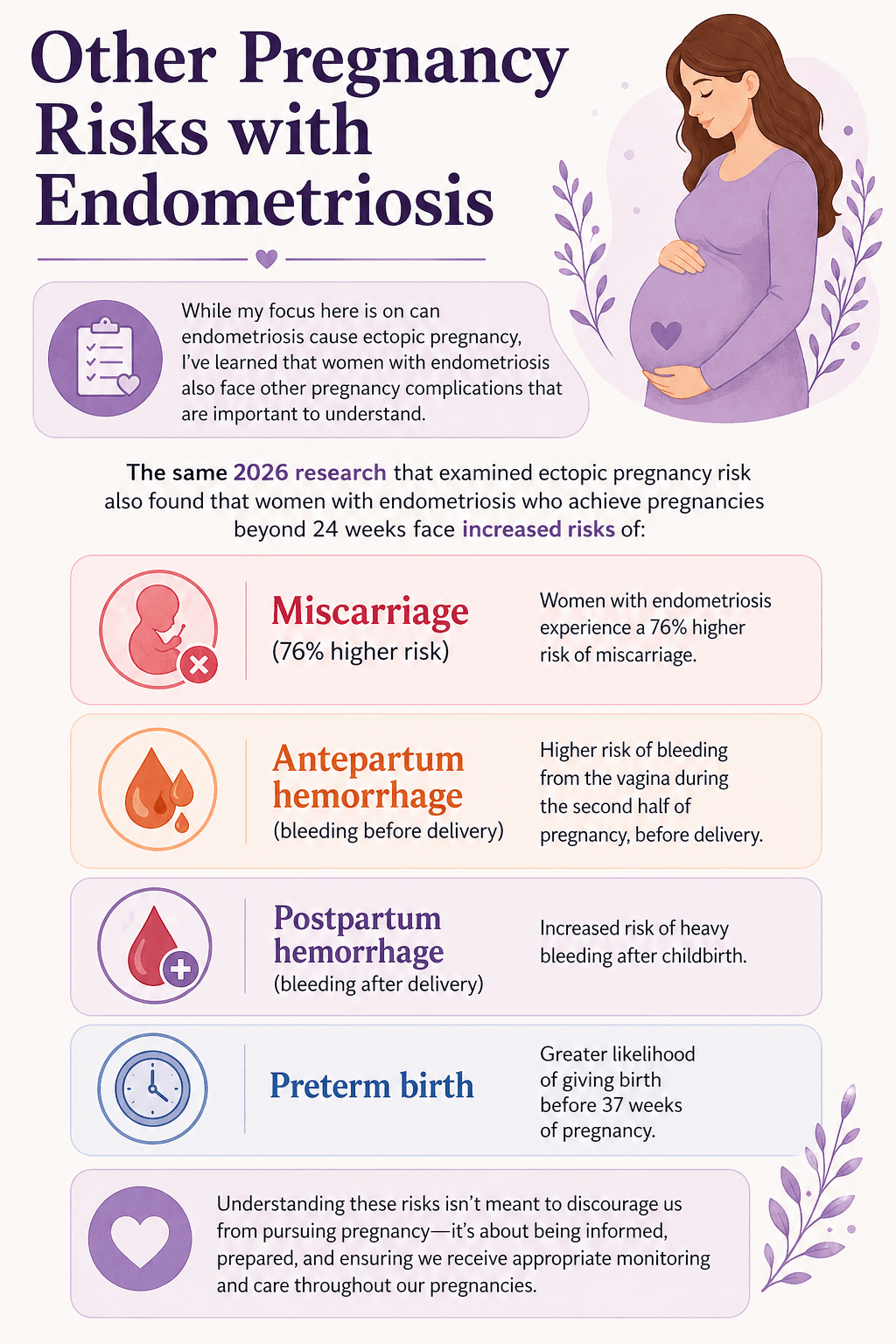
While my focus here is on can endometriosis cause ectopic pregnancy, I’ve learned that women with endometriosis also face other pregnancy complications that are important to understand.
The same 2026 research that examined ectopic pregnancy risk also found that women with endometriosis who achieve pregnancies beyond 24 weeks face increased risks of:
- Miscarriage (76% higher risk)
- Antepartum hemorrhage (bleeding before delivery)
- Postpartum hemorrhage (bleeding after delivery)
- Preterm birth
Understanding these risks isn’t meant to discourage us from pursuing pregnancy, it’s about being informed, prepared, and ensuring we receive appropriate monitoring and care throughout our pregnancies.
Staying Hopeful While Being Informed
I’ll be honest: researching endometriosis and ectopic has been emotionally challenging. There are days when the statistics feel overwhelming, and I wonder if trying to conceive is worth the risks. But then I remember that the majority of women with endometriosis do achieve healthy pregnancies.
Knowledge is power. Understanding the increased risk of ectopic pregnancy doesn’t mean it will happen to me—it means I’ll be vigilant, seek early prenatal care, and advocate for the monitoring I need. It means my healthcare team will be prepared and watching for warning signs.
The fact that women with endometriosis face approximately 1 in 50 risk of ectopic pregnancy also means that 49 out of 50 pregnancies will not be ectopic. Those are still favorable odds, especially when armed with knowledge and excellent medical care.
Questions to Ask Your Healthcare Provider
As I prepare for pregnancy, these are questions I’ve asked (or plan to ask) my doctors:
- Based on my surgical findings, how are my fallopian tubes? Is there evidence of tubal endometriosis?
- What is my personal risk level for ectopic pregnancy given my specific case?
- When should I schedule my first ultrasound if I become pregnant?
- What symptoms should prompt me to seek immediate medical attention?
- Should I be monitored differently during early pregnancy due to my endometriosis?
- Are there any preconception steps I can take to optimize my chances of healthy pregnancy?
Don’t hesitate to advocate for yourself and ask for the information you need to feel confident in your pregnancy journey.
Moving Forward with Informed Hope
The relationship between endometriosis ectopic pregnancy risk is real and scientifically documented, but it doesn’t have to define your journey to motherhood. Yes, the risk is approximately doubled. Yes, we need early monitoring and vigilant care. But many, many women with endometriosis, even stage 3 like me, go on to have healthy pregnancies and babies.
What matters most is being informed, working with knowledgeable healthcare providers, seeking early prenatal care, and trusting yourself to recognize when something doesn’t feel right.
I may not have personal pregnancy experience yet, but I’m committed to entering this chapter of my life with my eyes wide open, understanding both the challenges and the possibilities. My stage 3 endometriosis doesn’t make me less capable of becoming a mother; it just means I need to be more informed and proactive about my care.
Resources and Support
As I continue this journey, I’m grateful for the community of women who share their experiences, the researchers who continue studying these connections, and the medical professionals dedicated to helping women with endometriosis achieve their dreams of motherhood.
If you’re planning pregnancy with endometriosis, please know you’re not alone. Connect with other women, ask questions, demand answers from your healthcare team, and remember that your endometriosis doesn’t define your potential as a mother.
Are you planning pregnancy with endometriosis, or have you navigated this journey? What questions do you have? Share your experiences and concerns in the comments below or join our Endometriosis Sisters community, together, we can support each other through every stage of this journey.
Sources
The information in this article is based on peer-reviewed medical research and reputable health organizations:
- Frontiers in Medicine (2026). “Association between endometriosis and adverse reproductive and pregnancy outcomes”
- SAGE Journals (2025). “Link between endometriosis, pregnancy complications and infertility”
- The Royal Women’s Hospital Melbourne (2025). “Is there a link between endometriosis and ectopic pregnancy”
- PMC/NIH (2022). “Molecular Mechanisms Underlying the Association Between Endometriosis and Ectopic Pregnancy”
- SAGE Journals (2019). “Endometriosis and the risk of ectopic pregnancy: 10-year retrospective cohort study”
- Endometriosis Australia (2023). “Pregnancy and endometriosis”
- Nature Scientific Reports (2021). “Effect of endometrial preparation protocols on the risk of ectopic pregnancy”
- PMC/NIH (2020). “Endometriosis and the Fallopian Tubes: Theories of Origin”
- Endometriosis.org (2015/2024). “ESHRE2015: Endometriosis associated with a greater risk of complications in pregnancy”