When I was diagnosed with stage 3 endometriosis in November 2025 after surgery, I thought I finally had answers to years of pelvic pain and heavy periods. But there was one symptom that caught me completely off guard—hemorrhoids. The connection between hemorrhoids and endometriosis is far more common than most of us realize, yet it’s rarely discussed openly.
If you’ve been dealing with both conditions and wondering if they’re related, you’re not alone. Today, I want to share what I’ve learned through my own experience and research about how these two painful conditions can intersect in ways that many doctors don’t even discuss.
The Link Between Hemorrhoids and Endometriosis
Before my diagnosis, I had hemorrhoids that would sometimes bleed, especially during my menstrual cycle. I felt embarrassed talking about it, even with my doctor. But here’s what I wish someone had told me earlier: Can endometriosis cause hemorrhoids? The answer is more complex than a simple yes or no.
While endometriosis doesn’t directly cause hemorrhoids in the traditional sense, the two conditions are deeply connected through the bowel symptoms that many of us experience. Research shows that at least 60 percent of people with endometriosis have at least one bowel symptom. These symptoms, such as diarrhea, constipation, bloating, and straining during bowel movements, are all major risk factors for developing hemorrhoids.
How Endometriosis Creates the Perfect Storm for Hemorrhoids
Living with endometriosis means living with unpredictable bowel issues. The hormones and inflammatory proteins released by endometrial tissue in the abdominal cavity can wreak havoc on our digestive system. For me, this meant alternating between constipation and diarrhea, with the worst symptoms happening right before and during my period.
This is where endometriosis hemorrhoids become a real issue. When you’re constantly straining during bowel movements or experiencing diarrhea that irritates the rectal area, you’re putting pressure on the blood vessels in your anus and rectum. Over time, this pressure causes those vessels to swell, leading to hemorrhoids.
One member of an endometriosis support community described it perfectly: “Mine severely flare up and bleed when on a period”. That cyclical pattern is a telltale sign of the connection between these conditions.
Bowel Endometriosis: When It Gets More Complicated
In rare cases, endometriosis can actually grow in or around the rectum, creating what’s called bowel endometriosis. This affects about 5 to 10 percent of women with endometriosis. When endometriosis affects the bowel, it can cause rectal pressure, bleeding, and pain during bowel movements, symptoms that can easily be confused with hemorrhoids.
There’s even a documented case where a woman went to the doctor thinking she only had hemorrhoids, but during examination, doctors discovered a mass that turned out to be endometriosis in her rectum. This shows how easily these conditions can be mistaken for one another, and why it’s so important to have thorough examinations if your symptoms don’t improve with standard hemorrhoid treatments.
If you’re experiencing rectal bleeding that seems to sync with your menstrual cycle, or if you have persistent rectal pain that standard hemorrhoid treatments aren’t helping, I encourage you to read more about bowel endometriosis symptoms and discuss these concerns with a specialist.
My Personal Experience: What Changed After Surgery
Since my endometriosis surgery, I’ve noticed something interesting: my hemorrhoids haven’t bled as much as they used to. At first, I thought it was just luck, but then I realized that I had made significant changes to my diet post-surgery. I dramatically increased my fiber intake, focusing on whole grains, fruits, vegetables, and plenty of water.
The science backs this up. Studies have shown that fiber supplementation can reduce hemorrhoid bleeding by 50 percent. Fiber works by softening stool and making it easier to pass, which reduces the straining that aggravates hemorrhoids. For those of us with endometriosis who already struggle with bowel symptoms, a high-fiber diet can be a game-changer. BUT make sure to drink when increasing your fiber intake, as not drinking enough can actually make your stool harder rather than softer.
I’ve also been more mindful about foods that trigger inflammation and bowel symptoms. Many women with endometriosis find relief from a low-FODMAP diet, which targets visceral hypersensitivity and can significantly reduce bowel symptoms like bloating and constipation. This dietary approach has helped me maintain more regular bowel movements, which in turn has kept my hemorrhoids from flaring up.
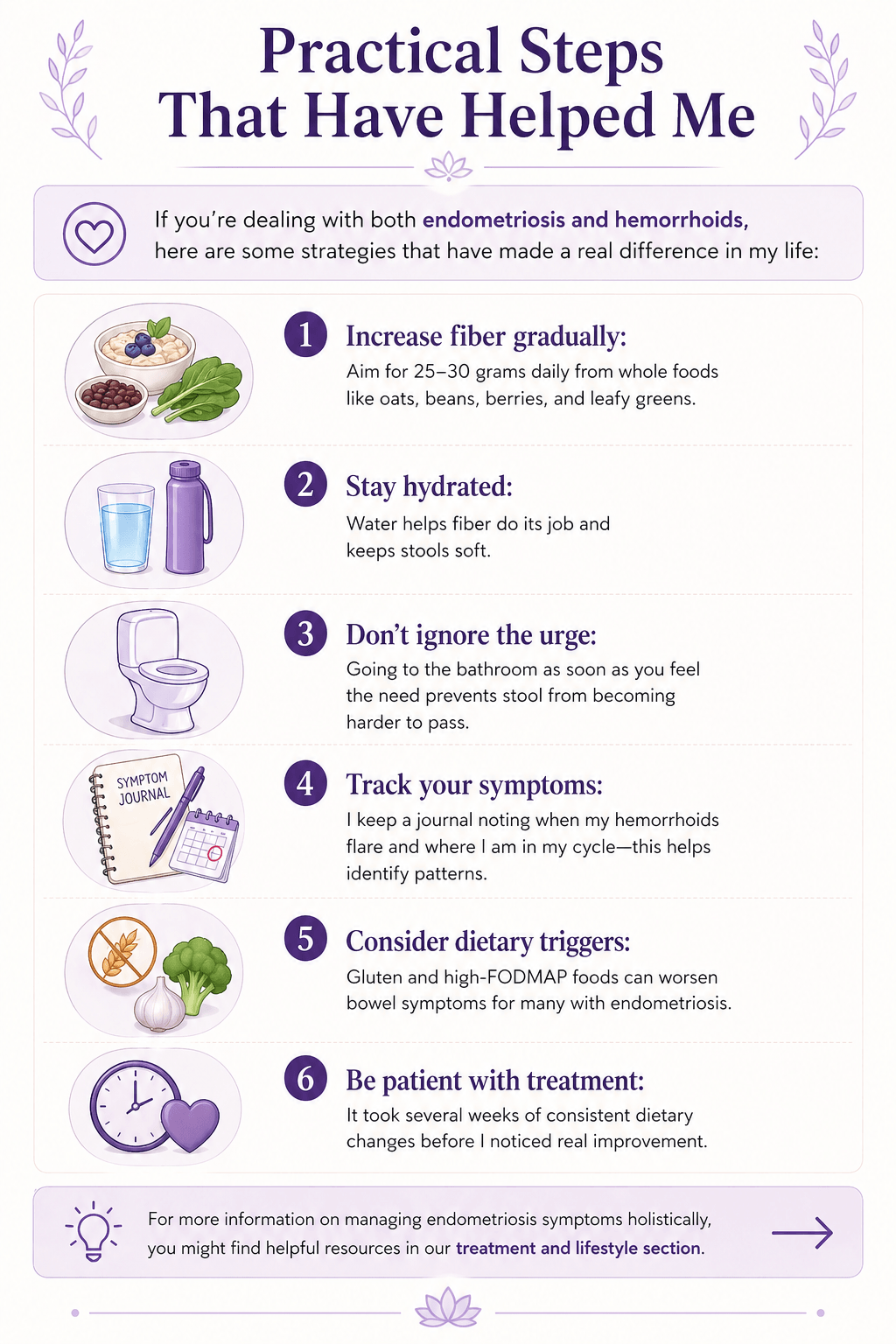
Practical Steps That Have Helped Me
If you’re dealing with both endometriosis and hemorrhoids, here are some strategies that have made a real difference in my life:
- Increase fiber gradually: Aim for 25-30 grams daily from whole foods like oats, beans, berries, and leafy greens
- Stay hydrated: Water helps fiber do its job and keeps stools soft
- Don’t ignore the urge: Going to the bathroom as soon as you feel the need prevents stool from becoming harder to pass
- Track your symptoms: I keep a journal noting when my hemorrhoids flare and where I am in my cycle—this helps identify patterns
- Consider dietary triggers: Gluten and high-FODMAP foods can worsen bowel symptoms for many with endometriosis
- Be patient with treatment: It took several weeks of consistent dietary changes before I noticed real improvement
For more information on managing endometriosis symptoms holistically, you might find helpful resources in our treatment and lifestyle section.
When to Seek Medical Attention
While dietary changes have helped me tremendously, it’s crucial to know when to see a doctor.
Seek medical attention if you experience:
- Rectal bleeding that’s heavy or doesn’t stop
- Severe pain during bowel movements
- A lump or mass near your anus that doesn’t improve
- Hemorrhoid symptoms that worsen during your menstrual cycle
- Bleeding that may be darker or seems different from typical hemorrhoid bleeding
These could be signs of something more serious, including bowel endometriosis that requires specialized treatment. A thorough examination, including digital rectal examination and potentially imaging, can help distinguish between simple hemorrhoids and endometriosis involvement.
The Importance of Comprehensive Care
One of the most frustrating aspects of living with endometriosis is that symptoms often overlap with other conditions, making diagnosis challenging. Hemorrhoids might seem like a minor issue compared to the debilitating pain many of us experience, but they significantly impact quality of life.
I’ve learned that treating endometriosis effectively means addressing all the ways it affects our bodies, including these uncomfortable bowel-related symptoms. After my surgery and with proper dietary management, I’m finally experiencing relief that I didn’t think was possible.
If you’re newly diagnosed or still searching for answers, I encourage you to explore my personal endometriosis journey, where I share more details about my diagnosis and treatment path.
You’re Not Alone in This Journey
Sisters, if you’ve been silently suffering with hemorrhoids alongside your endometriosis symptoms, please know that you’re not alone. This connection is real, it’s common, and it’s nothing to be ashamed of. Our bodies are dealing with a chronic inflammatory condition that affects multiple systems, and sometimes that manifests in unexpected ways.
The relationship between hemorrhoids and endometriosis is complex, but understanding it empowers us to advocate for better care and find relief. Since increasing my fiber intake and being more mindful of my diet post-surgery, I’ve experienced significant improvement. While everyone’s journey is different, there is hope for managing both conditions effectively.
I’d love to hear about your experiences—have you dealt with hemorrhoids alongside your endo? What strategies have helped you? Share your story in our community support forum so we can continue supporting each other through every aspect of this challenging condition.
Remember, every symptom matters, every question is valid, and together, we’re stronger. Your experience could help another sister finally connect the dots in her own journey.
Frequently Asked Questions About Endometriosis and Hemorrhoids
Can endometriosis cause hemorrhoids directly?
Endometriosis doesn’t directly cause hemorrhoids, but the bowel symptoms associated with endometriosis, like chronic constipation, diarrhea, and straining during bowel movements, create conditions that lead to hemorrhoid development. The inflammatory response from endometriosis also affects digestive function, making hemorrhoids more likely.
How can I tell if my rectal bleeding is from hemorrhoids or endometriosis?
Hemorrhoid bleeding is typically bright red and occurs during or after bowel movements. If your rectal bleeding is cyclical (worsens during your period), darker in color, or accompanied by severe rectal pain or pressure that doesn’t respond to hemorrhoid treatment, it could indicate bowel endometriosis. Always consult a healthcare provider for proper diagnosis.
Will my hemorrhoids improve after endometriosis surgery?
Many women, including myself, notice improvement in hemorrhoid symptoms after endometriosis surgery, especially when combined with dietary changes. Surgery can reduce inflammation and improve bowel function, but managing hemorrhoids also requires addressing the underlying straining and bowel habits through increased fiber intake and hydration.
What foods should I eat to help both conditions?
Focus on high-fiber foods like whole grains, fruits, vegetables, beans, and legumes to improve bowel movements and reduce hemorrhoid symptoms. Many women with endometriosis also benefit from anti-inflammatory foods and avoiding triggers like gluten, dairy, and high-FODMAP foods. Staying well-hydrated is crucial for both conditions.
Can bowel endometriosis be mistaken for hemorrhoids?
Yes, absolutely. Bowel endometriosis can cause rectal pain, bleeding, and pressure that mimic hemorrhoid symptoms. There are documented cases where women were initially treated for hemorrhoids, only to discover they had endometriosis in the rectum. If standard hemorrhoid treatments aren’t working, ask your doctor about the possibility of bowel endometriosis.
How much fiber should I eat daily to help with hemorrhoids?
Aim for 25-30 grams of fiber daily from whole food sources. Increase your fiber intake gradually to avoid bloating and gas, and make sure to drink plenty of water, at least 8 glasses daily, to help fiber work effectively.
Are hemorrhoids more common in women with endometriosis?
While there isn’t specific data on prevalence rates, the connection is significant because over 60 percent of women with endometriosis experience bowel symptoms. These symptoms, constipation, diarrhea, and straining, are major risk factors for hemorrhoid development. Many women in endometriosis communities report experiencing both conditions simultaneously.