When I was diagnosed with stage 3 endometriosis, I thought I finally had all the answers to my suffering. But what I didn’t expect was to discover that my chronic acid reflux, something I’d been battling for months, was intimately connected to both my endometriosis and how I’d been managing it.
So, can endometriosis cause acid reflux?
If you’ve been experiencing that burning sensation in your chest, constant heartburn, or stomach pain alongside your endo symptoms, you’re not alone. The connection between endometriosis and acid reflux is real, scientifically documented, and more common than many doctors realize.
Understanding the Connection: Does Endometriosis Cause Acid Reflux?
The relationship between endometriosis acid reflux is complex and multifaceted. Research shows that women with endometriosis are significantly more likely to develop gastroesophageal reflux disease (GERD) compared to women without the condition.
Here’s what happens in our bodies: endometriosis is a chronic inflammatory condition, and that inflammation doesn’t just stay localized in our pelvis. It creates a domino effect throughout our entire digestive system, leading to issues like irritable bowel syndrome (IBS), small intestinal bacterial overgrowth (SIBO), and yes, acid reflux.
But there’s another layer to this story, one I learned the hard way through my own experience.
My Wake-Up Call: When Pain Relief Became the Problem
For months before my surgery, I was taking paracetamol multiple times a day to manage my endometriosis pain. Sometimes I’d take it on an empty stomach because the pain was so unbearable I couldn’t wait to eat. I needed relief immediately, and I thought I was doing the right thing by managing my symptoms.
What I didn’t realize was that I was creating a whole new problem. The constant use of pain medication, especially on an empty stomach, was destroying my stomach lining. My acid reflux wasn’t just about endometriosis, it had evolved into full-blown gastritis.
My doctor prescribed pantoprazole, and while it helped temporarily, I soon learned through research that long-term use of proton pump inhibitors like pantoprazole comes with its own set of risks. Studies show that taking these medications for extended periods can increase the risk of bone fractures, vitamin B12 deficiency, kidney problems, and even gastric cancer.
I realized I couldn’t just keep masking the problem. I needed to address the root cause.
The Hormonal Factor: Why Endometriosis and Acid Reflux Go Hand in Hand
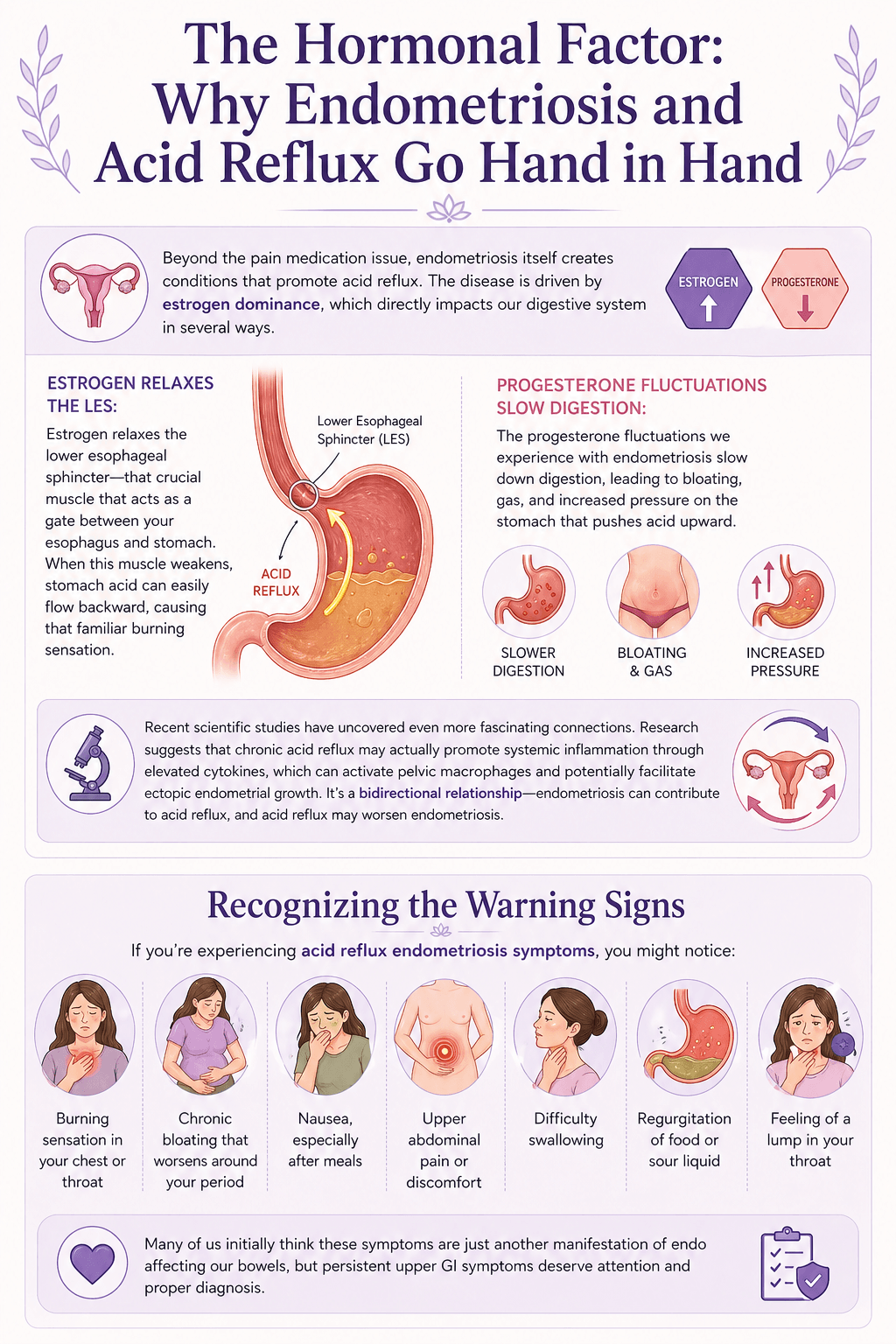
Beyond the pain medication issue, endometriosis itself creates conditions that promote acid reflux. The disease is driven by estrogen dominance, which directly impacts our digestive system in several ways.
Estrogen relaxes the lower esophageal sphincter, that crucial muscle that acts as a gate between your esophagus and stomach. When this muscle weakens, stomach acid can easily flow backward, causing that familiar burning sensation. Additionally, the progesterone fluctuations we experience with endometriosis slow down digestion, leading to bloating, gas, and increased pressure on the stomach that pushes acid upward.
Recent scientific studies have uncovered even more fascinating connections. Research suggests that chronic acid reflux may actually promote systemic inflammation through elevated cytokines, which can activate pelvic macrophages and potentially facilitate ectopic endometrial growth. It’s a bidirectional relationship, endometriosis can contribute to acid reflux, and acid reflux may worsen endometriosis.
Recognizing the Warning Signs
If you’re experiencing acid reflux endometriosis symptoms, you might notice:
- Burning sensation in your chest or throat
- Chronic bloating that worsens around your period
- Nausea, especially after meals
- Upper abdominal pain or discomfort
- Difficulty swallowing
- Regurgitation of food or sour liquid
- Feeling of a lump in your throat
Many of us initially think these symptoms are just another manifestation of endo affecting our bowels, but persistent upper GI symptoms deserve attention and proper diagnosis.
How I’m Managing Without Long-Term Medication
After learning about the risks of prolonged pantoprazole use, I made the difficult decision to stop taking it and focus on dietary management instead. I’m not saying this approach is right for everyone, please always consult with your doctor, but here’s what has worked for me.
I’ve had to say goodbye to some foods I loved. Chocolate, tomatoes, and lemon, all major triggers,are now occasional treats rather than regular parts of my diet. I still indulge sometimes, but I’m much more mindful because I know the acid they cause isn’t worth the temporary pleasure.
Instead, I focus on eating non-acidic foods that are gentler on my stomach. My diet now includes plenty of lean proteins, cooked vegetables (avoiding acidic ones), grains like rice and oatmeal, and low-fat dairy or dairy alternatives. I eat smaller, more frequent meals rather than three large ones.
The Hidden Danger: NSAIDs and Endometriosis Pain Management
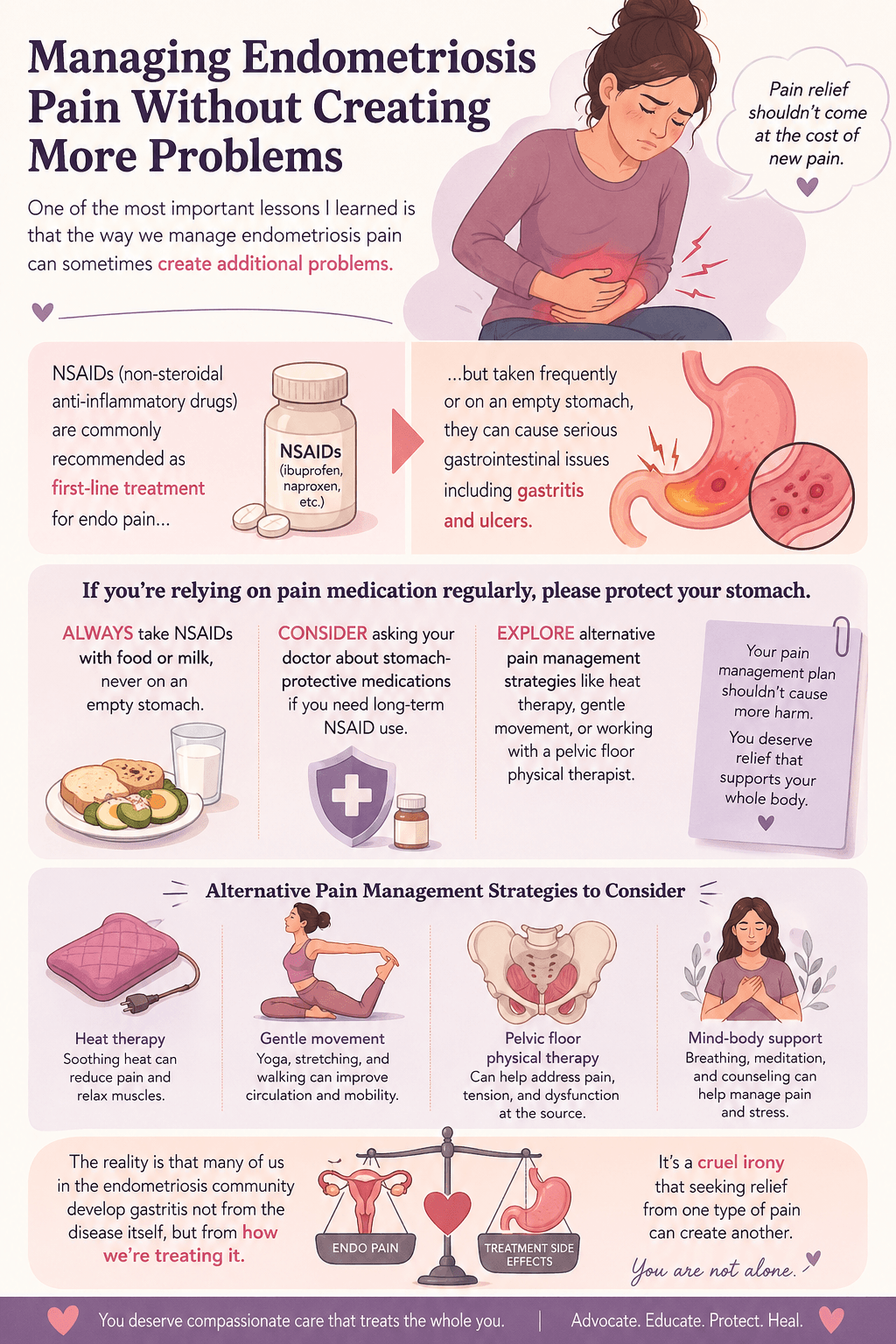
One of the most important lessons I learned is that the way we manage endometriosis pain can sometimes create additional problems. NSAIDs (non-steroidal anti-inflammatory drugs) are commonly recommended as first-line treatment for endo pain, but taken frequently or on an empty stomach, they can cause serious gastrointestinal issues including gastritis and ulcers.
If you’re relying on pain medication regularly, please protect your stomach. Always take NSAIDs with food or milk, never on an empty stomach. Consider asking your doctor about stomach-protective medications if you need long-term NSAID use. And explore alternative pain management strategies like heat therapy, gentle movement, or working with a pelvic floor physical therapist.
The reality is that many of us in the endometriosis community develop gastritis not from the disease itself, but from how we’re treating it. It’s a cruel irony that seeking relief from one type of pain can create another.
Finding Support and Moving Forward
Living with both endometriosis and acid reflux feels overwhelming at times. There are days when I’m not sure which condition is causing which symptom, and managing both through dietary changes requires constant vigilance and sacrifice.
But I’ve learned that understanding the connection between these conditions gives me power. Instead of feeling confused and helpless, I can make informed decisions about my treatment and lifestyle. I can advocate for myself with healthcare providers who might not immediately see the link between my endo and my digestive issues.
At Endometriosis Sisters, we believe in sharing these real experiences because they help others feel less alone. If you’re struggling with similar symptoms, know that you’re not imagining the connection. The science supports what your body is telling you.
Key Takeaways
Living with endometriosis means navigating a complex web of symptoms and conditions that often extend far beyond pelvic pain. The connection between can endometriosis cause acid reflux is real, documented, and multifaceted—involving chronic inflammation, hormonal imbalances, and sometimes the very medications we use to find relief.
If you’re experiencing persistent acid reflux alongside your endometriosis, don’t dismiss it as just another symptom to endure. Talk to your doctor about proper diagnosis and treatment options. Consider keeping a food diary to identify your triggers. Be mindful of how you’re taking pain medications, and protect your stomach when you do.
Most importantly, remember that managing these conditions is a journey, not a destination. Some days will be harder than others, but armed with knowledge and a supportive community, we can find ways to feel better and reclaim our quality of life.
You’re not alone in this, sisters. We’re navigating these complicated waters together, one meal, one day, one decision at a time.
Frequently Asked Questions
Can endometriosis cause acid reflux directly?
Yes, endometriosis can contribute to acid reflux through multiple mechanisms. The chronic inflammation associated with endometriosis affects your entire digestive system, not just your pelvis. Additionally, the estrogen dominance that drives endometriosis can relax the lower esophageal sphincter, allowing stomach acid to flow backward into your esophagus. Hormonal fluctuations also slow digestion, creating bloating and pressure that pushes acid upward.
What is the connection between endometriosis acid reflux and gastritis?
In my experience and based on research, the connection often involves the pain medications we use to manage endometriosis. Taking NSAIDs or paracetamol frequently, especially on an empty stomach, can damage your stomach lining and lead to gastritis. This creates a vicious cycle: endometriosis causes pain, pain medication causes gastritis, and gastritis leads to acid reflux symptoms. The inflammatory nature of endometriosis itself can also make your digestive system more vulnerable to these issues.
Does endometriosis cause acid reflux in everyone with the condition?
Not everyone with endometriosis will develop acid reflux, but studies show that women with endometriosis have a significantly higher risk compared to women without the condition. Research indicates that the bidirectional relationship between these conditions means they can influence each other. If you have endometriosis and are experiencing persistent heartburn, chest burning, or upper abdominal discomfort, it’s worth discussing with your doctor.
Is it safe to take pantoprazole or other PPIs long-term for acid reflux with endometriosis?
This is something you should discuss carefully with your doctor. While medications like pantoprazole can provide significant relief, research shows that long-term use of proton pump inhibitors carries potential risks including vitamin B12 deficiency, bone fractures, kidney problems, and increased infection risk. In my case, I decided to focus on dietary management after learning about these risks, but the right approach varies for each person depending on symptom severity and individual circumstances.
What foods should I avoid if I have both endometriosis and acid reflux?
Based on my experience and dietary research, the main triggers to limit or avoid include acidic foods like tomatoes, citrus fruits (lemons, oranges), chocolate, spicy foods, caffeine, alcohol, and fatty or fried foods. I’ve had to significantly reduce my intake of these items, though I still enjoy them occasionally. Focus instead on non-acidic foods like lean proteins, whole grains (oatmeal, rice), fresh vegetables (avoiding acidic ones), and low-fat dairy or alternatives.
Can pain medications for endometriosis make acid reflux worse?
Absolutely. NSAIDs and paracetamol, when taken frequently or on an empty stomach, can irritate and damage your stomach lining, leading to gastritis and worsening acid reflux. This is what happened to me—I was taking paracetamol multiple times daily for endo pain, often on an empty stomach, which ultimately caused my gastritis. If you need to take these medications regularly, always take them with food and consider asking your doctor about stomach-protective options.
How can I tell if my digestive symptoms are from endometriosis or acid reflux?
This can be challenging because the symptoms overlap, and often both conditions are present simultaneously. Acid reflux typically causes burning in your chest or throat, regurgitation, and upper abdominal pain, while endometriosis-related bowel symptoms often include lower abdominal cramping, diarrhea or constipation, and pain that worsens during your period. The best approach is to work with healthcare providers who can properly evaluate and diagnose both conditions rather than trying to distinguish between them on your own.
Are there natural ways to manage acid reflux endometriosis without medication?
Dietary changes have been my primary approach since stopping pantoprazole. This includes eating smaller, more frequent meals; avoiding trigger foods; not eating within 3-4 hours of bedtime; and staying upright after meals. Elevating the head of your bed, maintaining a healthy weight, and managing stress can also help. However, if your symptoms are severe or persistent, don’t suffer in silence—work with your doctor to find the right treatment plan for you, which may include medication when necessary.